Shepherd's-purse - Capsella bursa-pastoris
Favourite Photos


Species Description
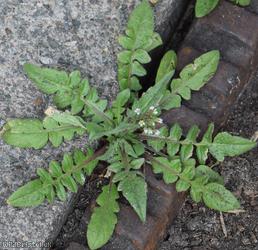
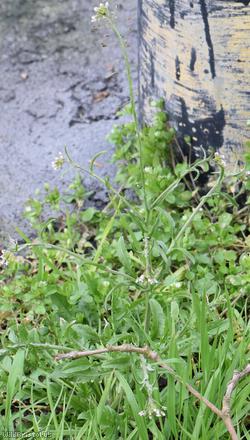
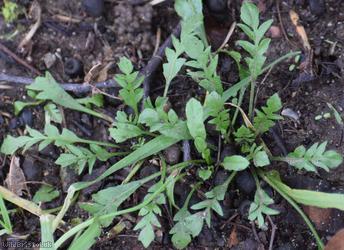
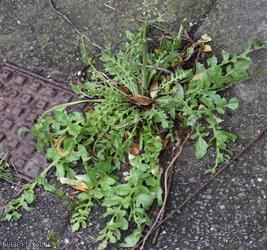
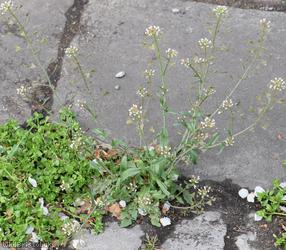
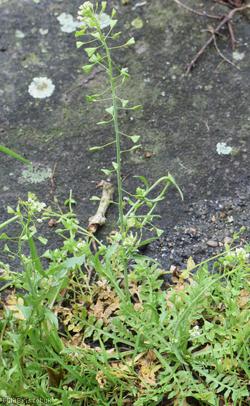
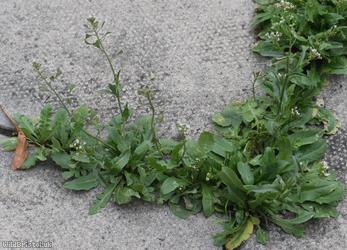
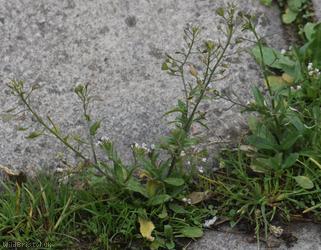
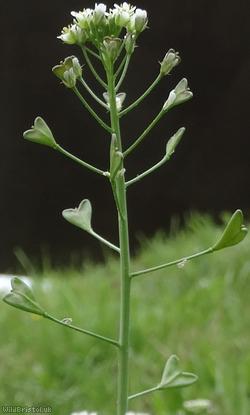
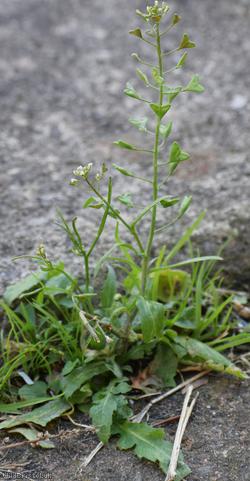
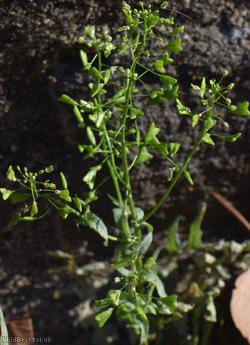
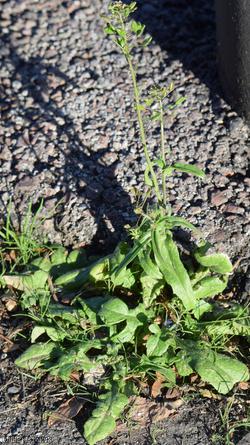
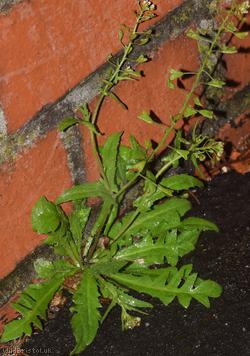
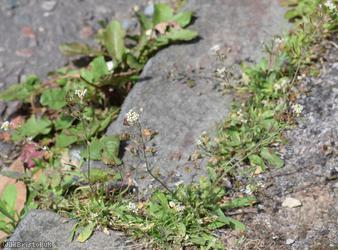
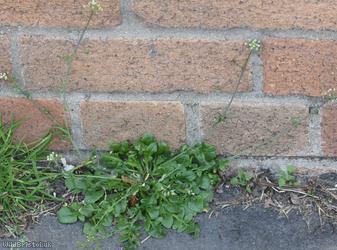
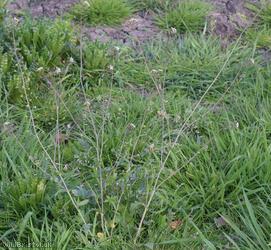
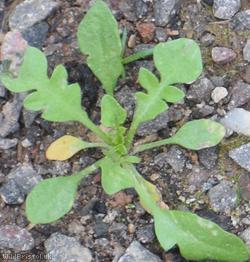
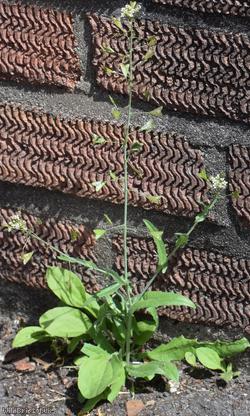
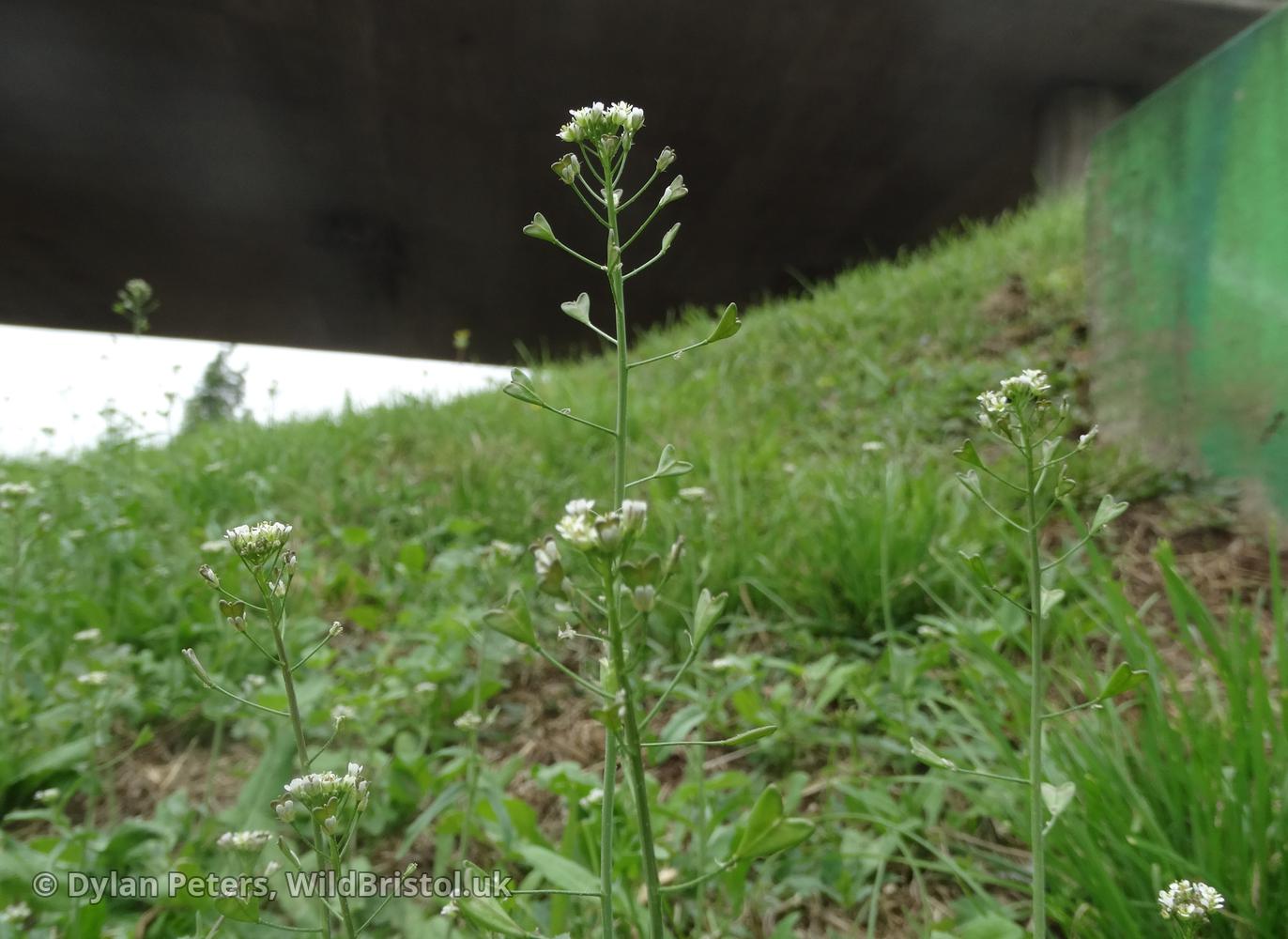
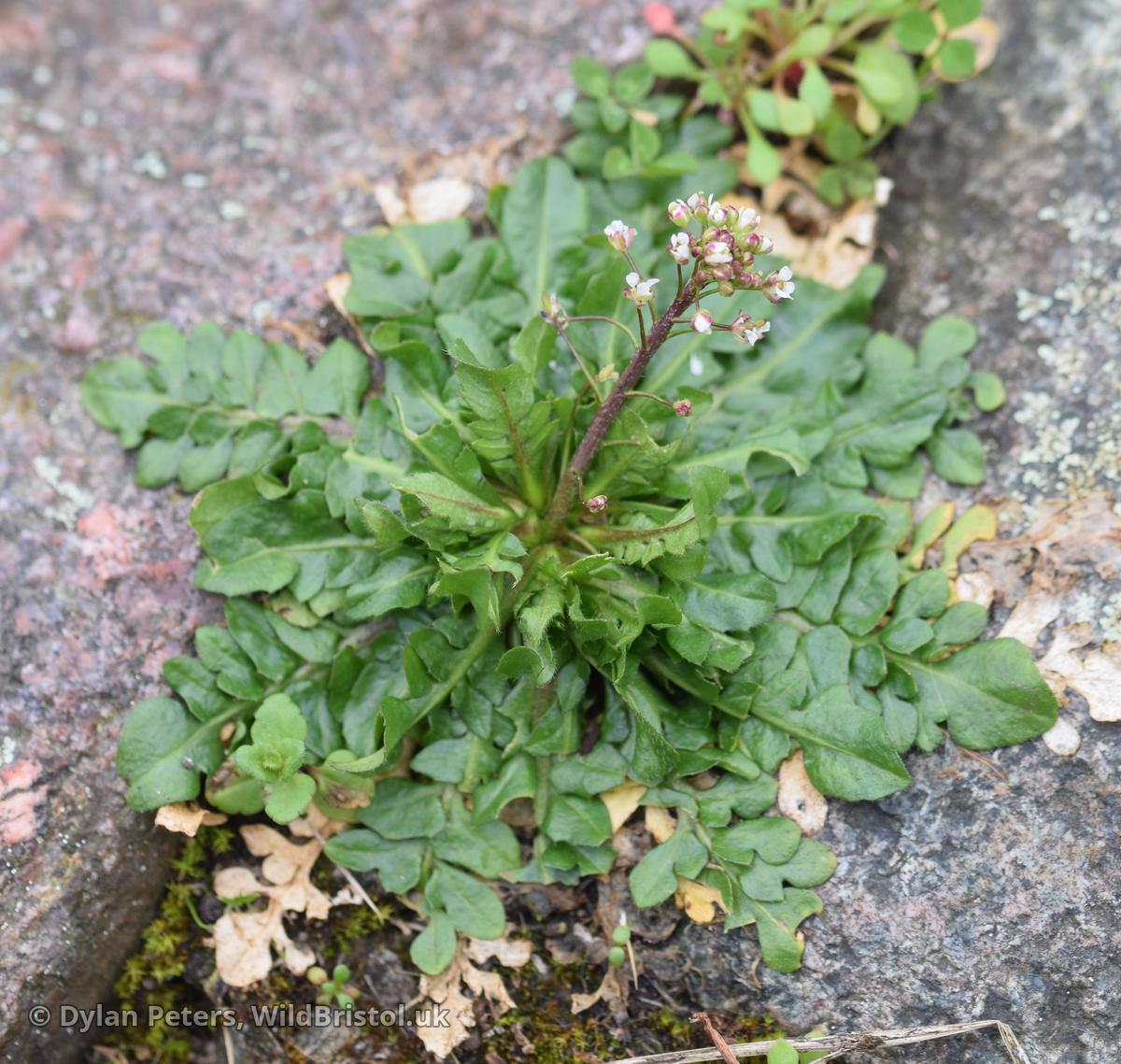
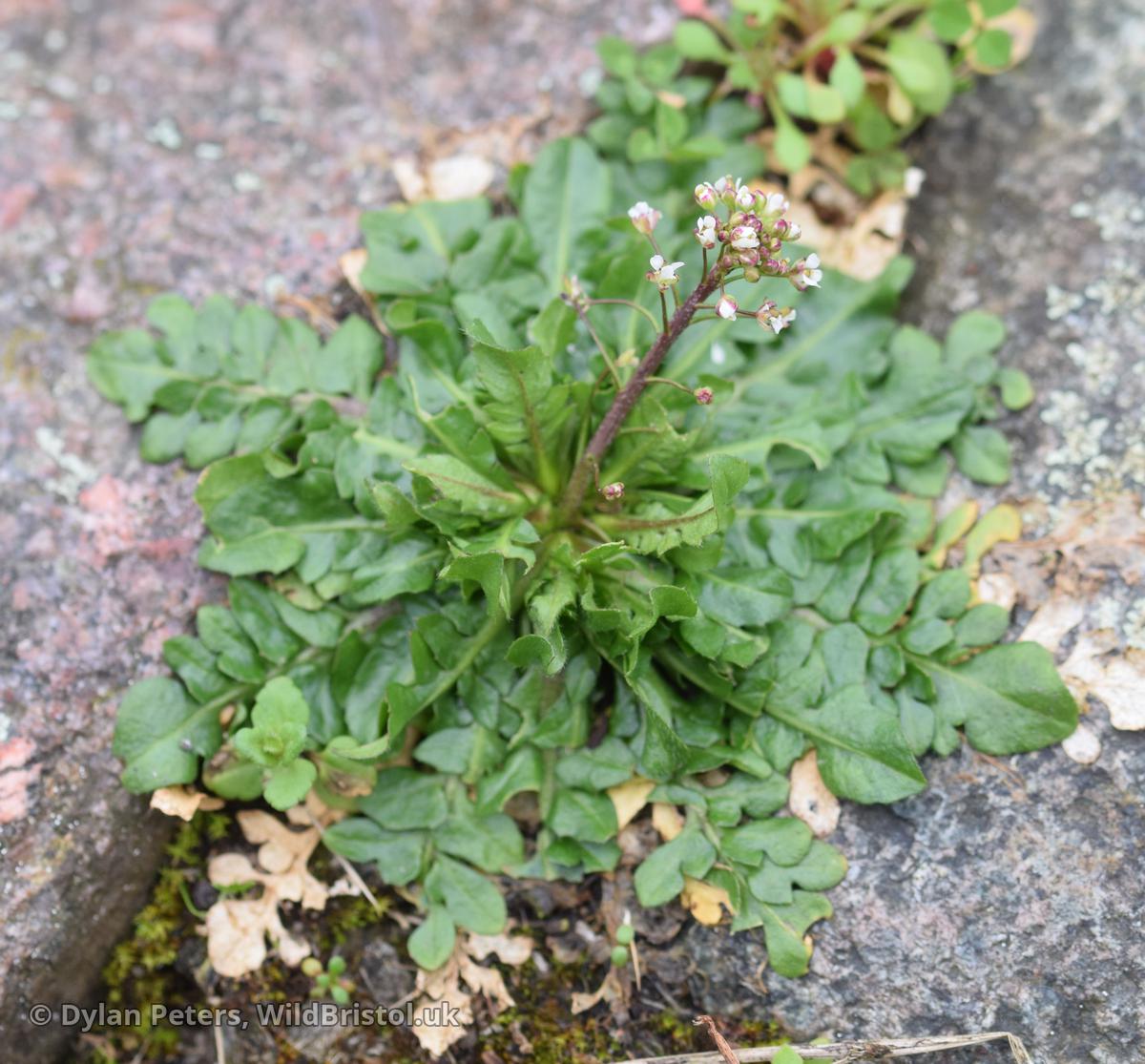
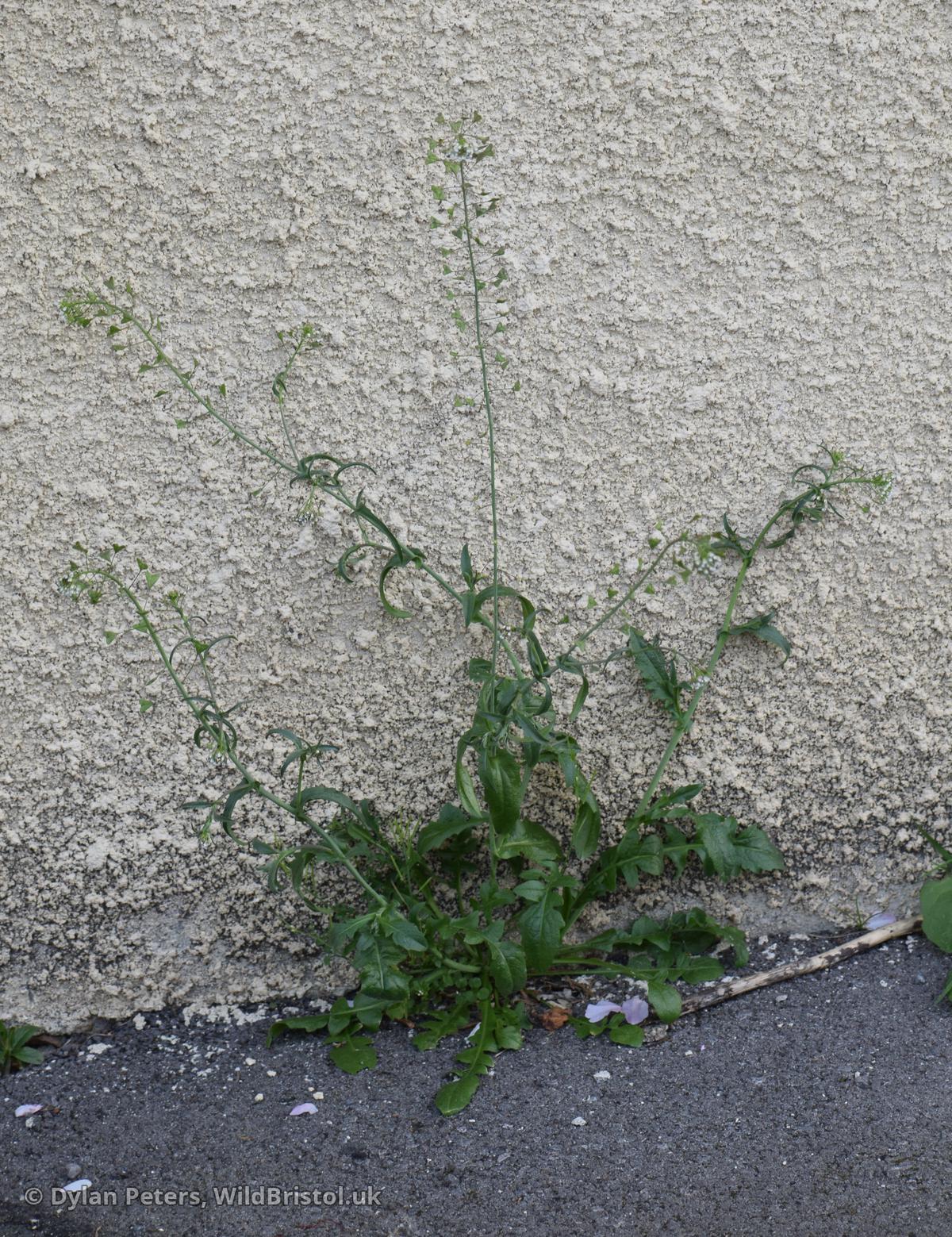
Common and widespread throughout the UK. Habitat includes: disturbed ground, agricultural land, wasteland, pavements, amenity spaces etc. So named because its heart-shaped seed-pods resemble purses worn by medieval peasants and when ripe they split open to reveal many copper coin-like seeds. A single plant can produce around 2000-3000 seeds.
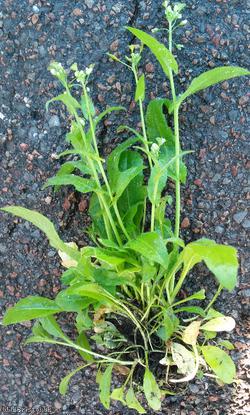
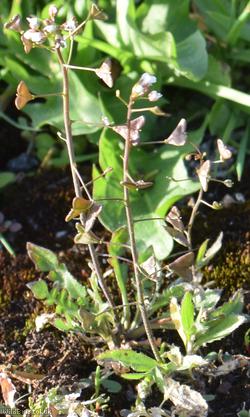
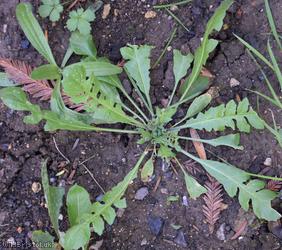
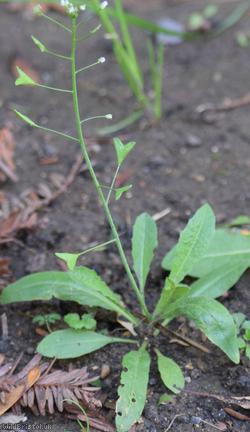
Shepherd's-purse is an extremely variable species and over 25 segregates have been recognised in Britain (according to Stace). See The Botanical Exchange Club, 1921 for 18 of them. However, little work has been done on them at all in recent years and with the exception of C. rubella (which itself appears to be treated somewhat variably), C. bursa-pastoris is regarded as one endlessly variable species.
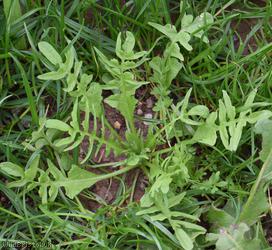
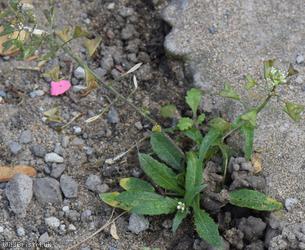
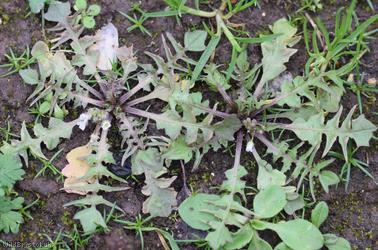
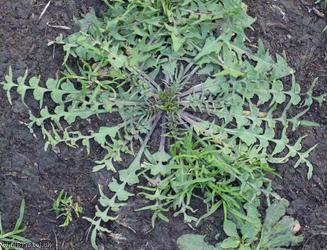
Shepherd's-purse has a high self-pollination rate (>c.90%) due to the stamens being adhered to the stigmas and adhising (releasing) before the flowers have even opened but they can still pollinate sexually. This has enabled the generation of many forms through hybridisation and isolation. Because the gene pool hasn't been fully 'closed off' and they are still able to pollinate normally, the current stance is to treat it as one very variable species but I'd argue that because the rate of self-pollination is so high, enough of the offspring can survive for distinct forms to be maintained, regardless of their ability to still cross pollinate. Traditionally any new forms generated would likely remain pretty stationary (as local biotypes) and so for classification purposes they would therefore be unworthy of describing fully due to their distribution not being adequate enough, but we humans have spread Shepherd's-purse so far and wide that it's bound to be the case that distinct forms could now exist over large areas and that they can essentially act as good species. Indeed, a handfull of my forms (listed as types) I am noticing across Bristol and in different parts of the UK. A few even appear to match with online representation, originating from other countries!
I'm convinced it's possible to separate the forms. Below is my somewhat chaotic working notes on those I encounter along with other information I've gathered. Watch this space!
Key features to look for:
- Plant robust
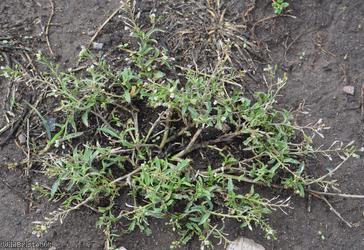
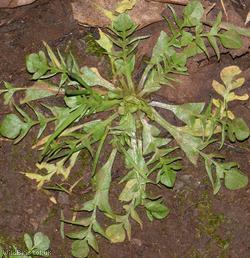
- Plant small and more delicate
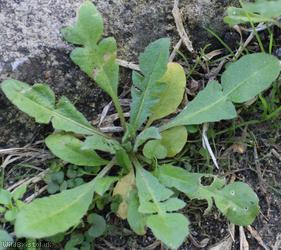
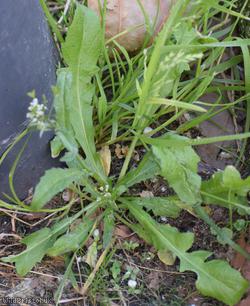
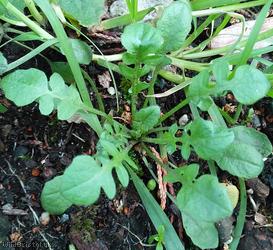
- Basal leaves simple and entire
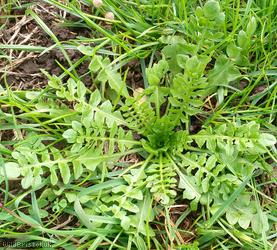
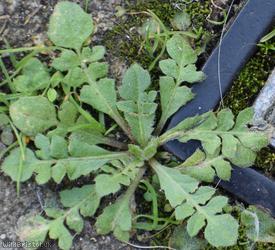
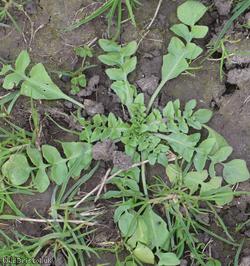
- Basal leaves divided
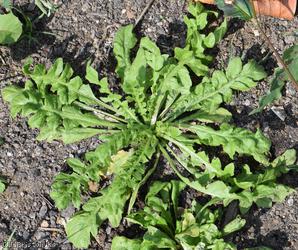
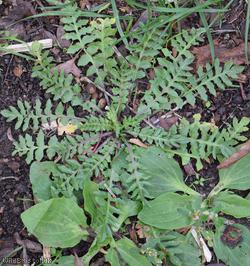
- Basal leaves pinnate and complexly lobed
- Petioles green or white
- Petioles purple
- Lateral lobes blunt or rounded
- Lateral lobes more or less pointed
- Lateral lobes finely linear-tapering
- Lateral lobes patent or slightly forward-directed
- Lateral lobes distinctly recurved-arcuate
- Lateral lobes 'humped' at base
- Lateral lobes not humped at base
- Terminal leaflet broad and rounded or ovate
- Terminal leaflet narrowly elliptical to linear
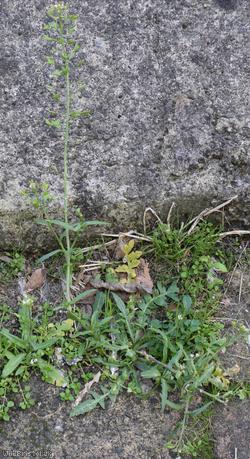
- Stem branching
- Stem simple
- Stem conspicuously densely bristly hairy
- Stem less hairy
- Stem more or less rounded in cross-section
- Stem distinctly angled in cross-section
- Stem c. 1-3mm across at base
- Stem c. 3-5mm across at base
- Stem c. 5-8mm across at base
- Stem-leaves present
- Stem-leaves absent
- Lower stem-leaves entire
- Lower stem-leaves divided
- Auricles c. 8-9 mm
- Auricles c. 4-6 mm
- Auricles on main stem acute
- Auricles on main stem blunt
- Auricles on main stem divergent
- Auricles on main stem convergent
- Capsules green
- Capsules suffused bronze
- Capsules purplish-brown
- Capsules red
- Capsule longer than wide
- Capsule as wide as long
- Capsule c. 5-8 x 3-6 mm
- Capsule c. 9-11 x 7-8 mm
- Capsule margins straight
- Capsule margins concave
- Capsule margins convex
- Capsule margins scoliotic
- Capsule base attenuate
- Capsule base cuneate
- Capsule notch deep
- Capsule notch shallow
- Capsule notch absent
- Style short, not exceeding the notch
- Style longer and more or less leveling the 'lobe turning point'
- Style exceeding the notch
- Lobes prominent
- Lobes more or less absent
- Lobes more or less bluntly pointed
- Lobes perfectly curved for 180 degrees
- Lobes with the inner quarter-circular (90 degrees) and the outer side straight
- Notch wide angled, lobes widely spread
- Notch steep angled, lobes more or less forward-pointing
- Sepals green
- Sepals blushed with brownish red, sometimes bright magenta
- margins white
- margins magenta
- sepals glabrous to more or less so
- sepals noticeably hairy
- flowers c. 3 mm across
- flowers c. 5 mm across
- petals absent
- petals rounded-obovate, equaling or exceeding the sepals by less than half of its length when fully opened
- petals oblong, far exceeding the sepals (double the length) when fully opened
- Number of seeds present per capsule
- Seeds yellow
- Seeds orange
- Seeds red
Useful Links:
Almquist, 1907 also available on Internet Archive (p. 216 - 306)
Almquist, 1923 (unfortunately not accessible online).
A.R. Horwood in Botanical Exchange Club 1915, p. 317-325
Herbaria United Specimen collected at Bleadon, North Somerset in 1985 by A.R. Hill
Herbaria United Specimen of Group Sinuata collected from Clifton in 1935 by H.S. Thompson
Herbaria United - Interesting specimen collected from Pensford, North Somerset in 1931 by an unknown recorder (possibly a match for C. mediterranea)
Interesting one from Bristol Joss Carr, iNaturalist - looks to be a good match for C. lata (also resembles C. latula, C. obtusa and C. rotundata and this
Key by Rouy & Foucaud:
1 Silicula sensiblement plus longues que larges au sommet, plus ou moins sensiblement atténuées à la base 2
1 Silicula aussi larges ou presque aussi larges au sommet que longues 5
2 Silicula profondément échancrées, à lobes dépassant le style 3
2 Silicula à échancrure peu profonde 4
3 Silicula rénflees, longuement cunéiformes, étroites, très atténuées à la base; lobes de l'échancrure oblongs ..... var. stenocarpa Crep.
3 Silicula obcordées-cunéiformes, moins longuement atténuées à la base, grandes (7-8 mm de long sur 5-6 de large); lobes de l'échancrure oblongs ..... var. macrocarpa Albert.
3 Silicula plus petites, obcordées-cunéiformes, peu atténuées à la base; lobes de l'échancrure ovales ..... var. sabulosa (Jord.) R. & F.
4 Pétales presque deux fois plus longs que le calice; style exsert; silicula relativement larges, obcordées-cunéiformes ..... var. ruderalis (Jord.) R. & F.
4 Pétales dépassant moins longuement le calice; style inclus; silicula assez étroites, régulièrement cunéiformes ..... var. agrestis (Jord.) R. & F.
5 Silicula un peu plus longues que larges, à échancrure profonde et à lobes ovales dépassant beaucoup le style très court ..... var. praecox (Jord.) R. & F.
5 Silicula aussi larges que longues, à échancrure très courte et très obtuse; lobes ovales dépassés par le style; port effilé ..... var. virgata (Jord.) R. & F.
Translated:
1 Silicles noticeably longer than wide at the top, more or less noticeably attenuated at the base 2
1 Silicles as wide or almost as wide at the top as they are long 5
2 Silicles deeply notched, with lobes extending beyond the style 3
2 Silicles with shallow notch 4
3 Silicles swollen, long wedge-shaped, narrow, very attenuated at the base; lobes of the notch oblong ..... var. stenocarpa Crep.
3 Silicles obcordate-cuneiform, less long attenuated at the base, large (7-8 mm long by 5-6 wide); lobes of the notch oblong ..... var. macrocarpa Albert.
3 Silicles smaller, obcordate-cuneiform, slightly attenuated at the base; lobes of the notch oval ..... var. sabulosa (Jord.) R. & F.
4 Petals almost twice as long as the calyx; style exserted; silicles relatively large, obcordate-cuneiform ..... var. ruderalis (Jord.) R. & F.
4 Petals extending less than the calyx; style included; siliciles quite narrow, regularly wedge-shaped ..... var. agrestis (Jord.) R. & F.
5 Silicles a little longer than wide, with a deep notch and oval lobes extending much beyond the very short style ..... var. praecox (Jord.) R. & F.
5 Silicles as wide as they are long, with a very short and very obtuse notch; oval lobes overwhelmed by style; tapered port ..... var. virgata (Jord.) R. & F.
Ernst Almquist:
- Capsella mediterranea (E.B. Almq.) E.B. Almq.
- Capsella batavorum (E.B. Almq.) E.B. Almq.
- Capsella laevigata (E.B. Almq.) E.B. Almq.
- Capsella brittonii (E.B. Almq.) E.B. Almq.
- Capsella druceana (E.B. Almq.) E.B. Almq.
- Capsella concava (E.B. Almq.) E.B. Almq. [according to Kew this is synonymous with C. rubella Reut.]
- Capsella reuteri (E.B. Almq.) E.B. Almq. [possibly synonymous with C. rubella Reut.]
- Capsella patagonica (E.B. Almq.) E.B. Almq.
- Capsella anglica (E.B. Almq.) E.B. Almq.
- Capsella turoniensis (E.B. Almq.) E.B. Almq.
- Capsella belgica (E.B. Almq.) E.B. Almq.
- Capsella semirubella (E.B. Almq.) E.B. Almq.
- Capsella gallica (E.B. Almq.) E.B. Almq.
- Capsella bremensis (E.B. Almq.) E.B. Almq.
- Capsella abscissa (E.B. Almq.) E.B. Almq.
- Capsella trevirorum (E.B. Almq.) E.B. Almq.
- Capsella germanica (E.B. Almq.) E.B. Almq.
- Capsella viminalis (E.B. Almq.) E.B. Almq.
Additions to the list:
- Capsella alandica E.B. Almq.
- Capsella grossa E.B. Almq. JSTOR, Natural History Museum Syntype Specimen
- Capsella hiatula E.B. Almq.
- Capsella integrella E.B. Almq. JSTOR, Natural History Museum Syntype Specimen
- Capsella origo E.B. Almq. JSTOR, Natural History Museum Type Specimen
- Capsella pergrossa E.B. Almq. JSTOR, GBIF, Natural History Museum Syntype Specimen
- Capsella penarthae (Shull) Wilmott B.E.C. 1944 (p. 468 & 517)
- Capsella provincialis (E.B. Almq.) E.B. Almq. JSTOR, GBIF, Natural History Museum Type Specimen
- Capsella rhenana E.B. Almq. JSTOR, Natural History Museum Syntype Specimen, Natural History Museum Syntype Specimen
- Capsella robusta E.B. Almq. GBIF
- Capsella scolio-caspica (E.B. Almq.) E.B. Almq. JSTOR, Natural History Museum Type Specimen
- Capsella segetum E.B. Almq.
- Capsella sinuosa E.B. Almq. JSTOR, GBIF, Natural History Museum Type Specimen
- Capsella sublaevigata E.B. Almq.
Glos. Fl. Lists 7 of these:
- Capsella batavorum (E.B. Almq.) E.B. Almq.
- Capsella belgica (E.B. Almq.) E.B. Almq.
- Capsella brittonii (E.B. Almq.) E.B. Almq.
- Capsella turoniensis (E.B. Almq.) E.B. Almq.
- Capsella mediterranea (E.B. Almq.) E.B. Almq.
- Capsella druceana (E.B. Almq.) E.B. Almq.
- Capsella trevirorum (E.B. Almq.) E.B. Almq.
I. Capsules very convex; notch mostly deep (except C. laevigata)
- Capsella mediterranea (E.B. Almq.) E.B. Almq. Radical leaves of medium size, sinuate, usually pinnatifid; lobes broad, often kyphotic, not seldom very narrow and acuminate; stem leaves mostly entire, indented; leaves sometimes very hairy; stem firm, branched, foliosa, bifida; capsules 8-9 x 6 or 7-8 x 5-6, the form changing; wr. numerous, in my cultures usually not budding, pinnatifid; lobes broad, soon kyphotic, then very narrow; terminal lobes hardly ever cuneatiform.
In the environs of Cannes, very common. Similar form from Rouen. H.B. and different places in Surrey, C. E. Britton. Jordan previously cultivated at Lyon a species,C. praecox, that possesses a great many of the distinguishing features of C. mediterranea, even the brown spots on the stem and elsewhere; capsules 7 x 6. It is probably the same form.
Natural History Museum Type Specimen
- Capsella batavorum (E.B. Almq.) E.B. Almq. Leaves entire, sinuate, often pinnatifid, with rather triangular lobes; stem low, bifida; stem leaves scarcely indented; capsules 5 by 4, sometimes 7 x 5-6; wr. small, often budding, entire or sinuate, finally pinnatifid with broad lobes, the terminal often cuneatiform.
It differs from C. mediterranea in all its parts being smaller, and in the leaves being much more entire. I have never seen long, thin lobes. In culture both species are constant. I do not know all the forms of them, and am therefore unable to recognise all individuals that belong to this group.
Cultivated from Leyden, Liege and Paris. Similar plants from Zurich, and from London, Surrey, Oxford, and other places.
Natural History Museum Syntype Specimen
- Capsella laevigata (E.B. Almq.) E.B. Almq. Leaves broad and long, entire, sinuate to pinnatifid, with long, broad, triangular lobes, sometimes indented; stem firm, high, foliosa, mostly branched upward; capsules broad, convex, with the lateral margins rather parallel, notch usually shallow, sometimes deeper, with rounded lobes, 7-8 x 5-6 or 6-7 x 7-5.
In all parts larger than the following.
Cultivated from the environs of Stockholm, North Sweden and Finland. C. E. Britton has, as it seems, sent the same beautiful form from Surrey. Similar forms also from Treves and Cannes, but probably not identical.
Natural History Museum Type Specimen
- Capsella brittonii (E.B. Almq.) E.B. Almq. Leaves sinuate to pinnatifid; lobes long, broad, acuminate, at the base sometimes incised, but scarcely indented except in autumn; stem rather short, firm; capsules long, very convex,7-8 x 7-5, notch deep, lobes more or less acute.
C. E. Britton sent many individuals from Surrey, and I have cultivated several of them. I have also cultivated similar forms from Riga and Reval, and received specimens from Zurich, Brussels and Cannes.
Natural History Museum Type Specimen
II. Capsules broad, forming an isosceles triangle, lateral margins rather straight.
- Capsella druceana (E.B. Almq.) E.B. Almq. Radical leaves broad, usually entire, pedicels rather long; stem leaves a little indented; stem firm, bifida, foliosa; capsules short, broad, 7-8 x 6-7, lateral margins tolerably straight, notch deep, lobes divergent. They are before ripening concave, often oblique. Some individuals have the capsules rather convex. Wr. large, budding, leaves broad, entire, elliptic with long pedicels, soon more or less deeply incised; end lobes scarcely cuneatiform.
Cultivated from Oxford and Surrey, also from H.B. at Edinburgh, Leyden, Louvain and Hamburg.
The sub-species C. bifida of Crépin and Hobkirk has capsules like those of C. druceana, but the leaves are not described. Mott's v. bifida seems to be the same form as mine, also the leaves are similar. In my cultures from one individual I observed capsules of different forms, the lateral margins straight or convex, like v. macrophylla. I possess forms with broad capsules and straight margins, at the same time with large leaves. The capsules belong to v. bifida, the leaves perhaps partly to v. macrophylla. I think that C. druceana embraces at least a part of the last form. Also I believe v. rubellaeformis may partly belong to C. druceana. Cf. Rep. B.E.C. 319, 322, 1915.
My species, C. cuneifolia, from Antwerp was cultivated for four years. The wa., that is the wr. and the individuals in spring, seem to be clearly different from C. druceana as the end lobes are cuneate, the capsules narrower, 7-8 x 5-6, and the lateral margins straight. The sa. seem to be rather conformable to C. druceana. I cannot draw any limits. Perhaps I shall be able to find them in continued cultures. Perhaps also more species exist in this group.
[This is an excellent and very remarkable species, and apparently the most common in Britain.]
Natural History Museum Type Specimen
III. Capsules concave or oblique.
- Capsella concava (E.B. Almq.) E.B. Almq. [according to Kew this is synonymous with C. rubella Reut.] Radical leaves broad or narrow, entire, sinuate, sometimes indented or pinnatifid, lobes often kyphotic; stem firm, usually low, bifida, foliosa; wr. numerous, often budding, the leaves as mentioned, the end lobes often cuneate; capsules 8 x 6, always concave and attenuate at the base, notch moderate, very open.
Cultivated from Portugal, South Italy, California and Parana. Specimens from New Malden, Surrey, gathered in May (Britton), have small but concave capsules. From the seeds I got rather typical C. concava.
It is likely that Mott partly describes this species as v. rubellaeformis. Cf. Rep. B.E.C. 322, 1915.
Natural History Museum Syntype Specimen
- Capsella reuteri (E.B. Almq.) E.B. Almq. [possibly synonymous with C. rubella Reut.] This species from Besancon, H.B., agrees with the well known C. rubella Reuter, but has entire or sinuate leaves and is not spoiled by frost in winter. The form of the capsules, the small petals and small seeds distinguish these species from all other Capsellas. Capsules 6-7 x 5-6; sa. longer; wr. not budding.
G. C. Druce has sent me a few small individuals with similar capsules and leaves, but it seems that the petals are a little longer. They were collected in the cobblestones in front of a house at S. Zeal in Devonshire in August 1919, by the Rev. H. E. Fox. I also possess a similar form from London, N.W. It is possible that they belong to C. reuteri or to some hybrid of C. rubella. If true, it is interesting, so much more as C. E. Britton has not seen any form from Britain that he would refer to Reuter's species (Report 322, 1915). In the museums I have seen different forms labelled C. rubella that probably are hybrids.
Natural History Museum Type Specimen
- Capsella patagonica (E.B. Almq.) E.B. Almq. Leaves rather small, pinnatifid, often incised or kyphotic, sometimes sinuate and indented; stem not high, slender; capsules very scoliotic, concave, up to 9-10 x 6-7, notch deep, lobes long; wa. capsules smaller, from 6 x 6 to longer, notch shallower; wr. numerous, not large, seldom budding, leaves pinnatifid, lobes a little rounded, kyphotic, end lobes scarcely cuneate.
Cultivated from Patagonia (Dusén); similar forms also from Cannes and H.B. at Strassburg and Nantes, and in Italy and Portugal. One similar specimen also from Wigginton, Oxon, 1916, H. J. Riddelsdell.
Jordan's species, C. sabulosa, cultivated at Lyon, perhaps belongs to C. patagonica. The characters agree - capsules 5-6 x 5, in the lower parts being very narrow, lobes oval and leaves small.
C. provincialis E. At., from Cannes, agrees with this species, but the capsules have slight convex or straight lateral margins, 8-10 x 6.
Natural History Museum Type Specimen
- Capsella anglica (E.B. Almq.) E.B. Almq. Radical leaves rather narrow, sinuate or pinnatifid, incised and indented, with broad, obtuse lobes; pedicels short; stem firm, of medium height, bifida, foliosa; capsules a little concave and scoliotic, up to 10 x 6, wa. 7 x 6, lateral margins almost straight, notch shallow, cardiac, with rounded lobes; wr. large and numerous, often budding, leaves already described, end lobes often cuneate; in the spring pinnatifid with narrow, kyphotic lobes.
Cultivated from H.B. at Cambridge and from Brussels, where I have found the same form. Similar forms also cultivated from H.B. at Rouen and Leyden, lastly from Oxford (Druce), and London.
This species I have not found in literature. C. druceana has broader capsules, with deeper notch, not attenuate at the base and the leaves have a tendency to form rather broad ellipses with rounded ends and long pedicels. C. anglica has leaves often elongated to acute, pointed at both ends; capsules a little scoliotic.
- Capsella turoniensis (E.B. Almq.) E.B. Almq. Leaves entire, indented or sinuate, more or less incised but seldom pinnatifid, lobes often acute; stem low, slender, somewhat branched; capsules 7-8 x 5-6, lateral margins rather scoliotic, a little concave or convex, with the lobes partly jutting out, notch open and shallow; wa. shorter, perhaps less oblique; wr. very small, sometimes budding; leaves entire, not acuminate, incised, a few partly pinnatifid.
Cultivated from H.B. at Nantes and Tours. Similar form also from Ghent.
The capsules are smaller, the lobes of the notch more acute and the lateral margins more convex as in C. anglica. G. C. Druce has sent small specimens from Hertford, Surrey, and Watton, Norfolk, that perhaps belong to C. turoniensis, but possibly they are only small forms of C. anglica. The leaves are partly pinnatifid, lobes indented and incised. Generally C. anglica is much larger.
Natural History Museum Type Specimen
BSBI Herbaria United - possibly this
- Capsella belgica (E.B. Almq.) E.B. Almq. Radical leaves entire and sinuate or pinnatifid; lobes broad, acuminate, denticulate; stem leaves partly broad in both the mentioned forms; stem not high, very branched, bifida, foliosa, a little slender; capsules scoliotic, rather convex downwards, thin, notch shallow, 8-9 x 5; wr. large, numerous, lobes broad, then rather narrow, acuminate, very toothed, partly kyphotic.
This good species I found at Brussels and Treves. It is likely to be found in England.
Natural History Museum Syntype Specimen
- Capsella semirubella (E.B. Almq.) E.B. Almq. Radical leaves pinnatifid, lobes acuminate, kyphotic or lunulate; stem of medium size, weak or firm, low specimens in autumn; wr. numerous, lobes as mentioned; stem leaves toothed; capsules scoliotic and concave, notch shallow, cardiac, 8 x 5-6, in the autumn 6 x 5, notch deeper.
From Moerstrand, on the west coast of Sweden. Similar forms from Bremen and Brussels. Especially in autumn they are similar, but in the other seasons the capsules are 6-7 x 4-5, and the leaves are often lunulate. This should be looked for in England.
Natural History Museum Type Specimen
IV. Capsules small, narrow, notch shallow or absent, lateral margins rather straight.
- Capsella gallica (E.B. Almq.) E.B. Almq. Radical leaves pinnatifid, with acuminate lobes, often "short, closely pinnatifid in a dense rosette;" stem leaves rather numerous, incised, pinnatifid or entire; stem usually low, firm, bifida; capsules 6 x 4, notch shallow, cardiac, lateral margins straight or convex; wr. numerous, usually small; lobes broad, then narrow and incised or kyphotic.
Cultivated from Lille, H.B. C. E. Britton has sent from Merton, Surrey, several specimens, partly labelled v. densifolia, that belong to C. gallica. I have cultivated some of them - sa. capsules 6 x 5, leaves rather entire. Similar forms also from Middleham, W. Yorks, 1916 (Charles Waterfall), and from Hevington (A. R. Horwood).
Mott's v. densifolia and v. brachycarpa may both, at least partly, belong to C. gallica; also Jordan's C. virgata - capsules 5 x 5.
Natural History Museum Syntype Specimen
- Capsella bremensis (E.B. Almq.) E.B. Almq. Pinnatifid or sinuate; lobes triangular or narrow, incised and kyphotic; stem firm, bifida, branches long; capsules 6-7 x 4-5, notch almost absent, lateral margins rather straight; wr. numerous, leaves as mentioned.
From Bremenhaven cultivated, often apetalous. From Brussels, Treves and Ghent similar forms, with petals. W. H. Pearsall found the same in Dalton-in-Furness, see Report 210, 1917, and C. E. Britton in Surrey.
Mott's v. gracilis seems related, perhaps also Crépin's v. stenocarpa and Jordan's C. ruderalis from Rhône - capsules 7 x 5.
Natural History Museum Syntype Specimen
- Capsella abscissa (E.B. Almq.) E.B. Almq. Pinnatifid, lobes long, acuminate, narrow until almost filiform, kyphotic, sometimes lunulated, in the spring partly entire; stem very branched, partly bifida; capsules 6-7 x 4-5, concave, notch none, often rounded on the top and the lobes jutting out; sa. capsules sometimes longer, cuneiform, notch shallow; wr. numerous, often budding, lobes soon narrow, indented.
From Berlin and from Utrecht, much cultivated. Also from Lille. Charles Waterfall found a similar form in Middleham, Yorks, 1916, and C. E. Britton in Surrey.
Natural History Museum Syntype Specimen
Natural History Museum Type Specimen
- Capsella trevirorum (E.B. Almq.) E.B. Almq. Leaves pinnatifid; lobes narrow, acute, kyphotic to lunulate; stem of medium size, long, weak, branched; capsules 7-9 x 4-5, slightly convex, notch shallow, cardiac; wr. few, dying through frost in the Swedish winter.
Cultivated from Treves and Lorraine. Similar forms from West Barnes, Surrey (C. E. Britton), and other places in England.
[Abingdon, Berks, Druce, see Report, 1915, where it was confidently referred to Mott's densifolia; Chute, Wilts. 1915 [O. 931]. Druce; Slapton Sands, S. Devon, 1916 [P. 1727], Druce.]
Mott's v. stenocarpa-coronopifolia may, at least partly, belong to C. trevirorum, perhaps also C. agrestis Jordan - capsules 7 x 5. GBIF
Natural History Museum Syntype Specimen
BSBI Herbaria United - var. stenocarpa-coronopifolia and this and this - labeled as C. densifolia.
This says var. trevirorum but it is clearly different (looks to be my type 57 i.e. C. angustiloba?) and probably the same as this and this and this - labelled as var. cuneata and this - labelled as var. stenocarpa-coronopifolia - possibly C. rhenana? or more likely C. abscissa.
- Capsella germanica (E.B. Almq.) E.B. Almq. Leaves and stem as in the preceeding; capsules cuneiform with almost straight lateral margins, 5 x 4, notch insignificant; wr. numerous, able to withstand frost; lobes incised, soon narrow, kyphotic to lunulate.
From Bremen and the Rhine, cultivated. C. E. Britton found similar individuals in Surrey.
The leaves have much thinner lobes than C. bremensis.
Natural History Museum Syntype Specimen
- Capsella viminalis (E.B. Almq.) E.B. Almq. Leaves entire, much indented, often incised; stem firm, with long branches; capsules 6-7 x 4, cuneiform, notch very shallow; wr. numerous, entire, soon incised.
Cultivated from Bremen. Similar form also cultivated from Watton, Norfolk (F. Robinson). Cf. Rep. B.E.C. 210, 1917; 490, 1918.