Huntingdon Elm - Ulmus glabra x U. minor = U. x vegeta
Favourite Photos
| image | species | author | location | uploaded | taken | select |
|---|---|---|---|---|---|---|
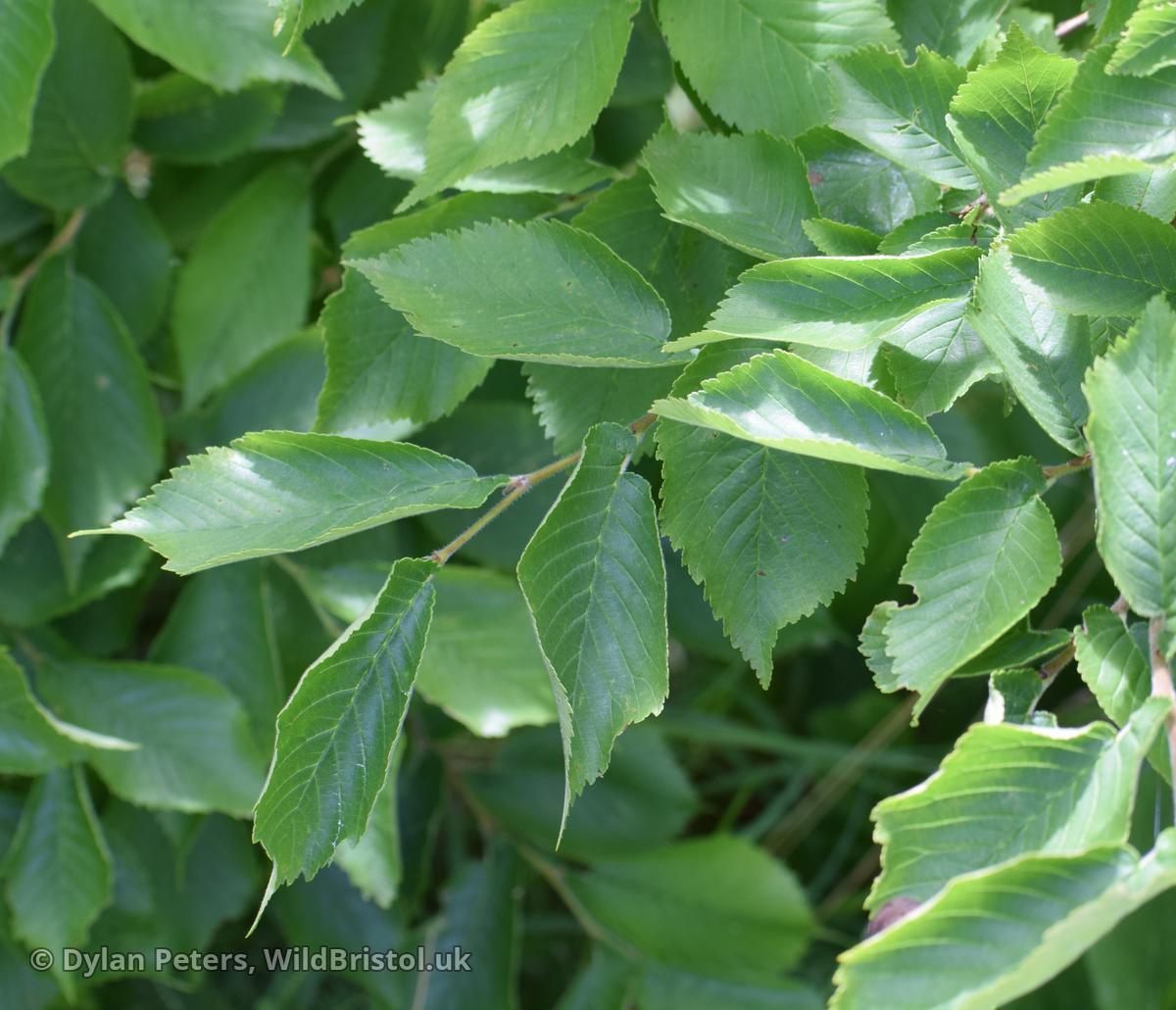 |
Huntingdon Elm - Ulmus glabra x U. minor = U. x vegeta | dylan | Eastville park | 15 Jul 2024, 9:04 p.m. | 13 Jul 2024, 3:42 p.m. | |
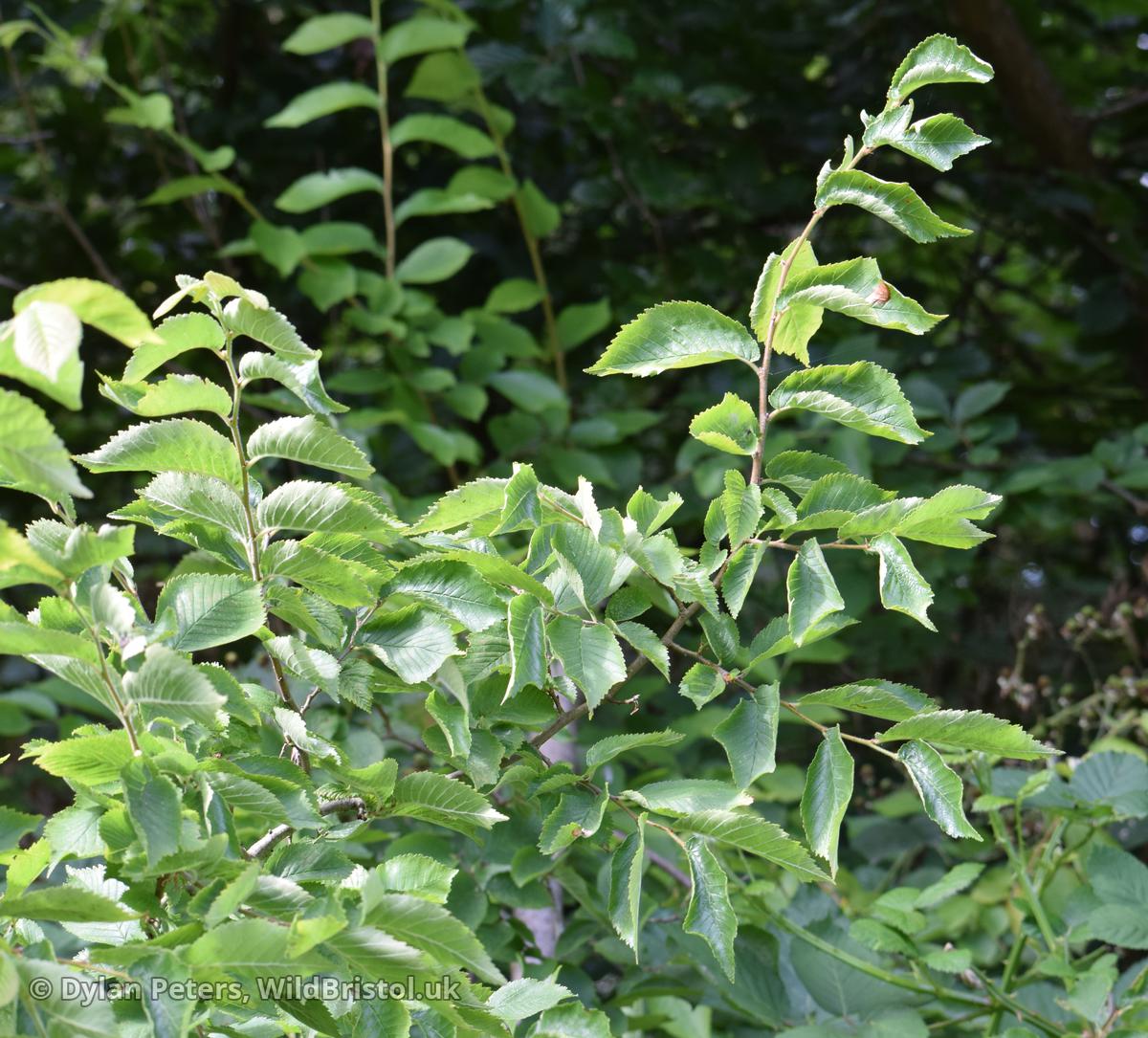 |
Huntingdon Elm - Ulmus glabra x U. minor = U. x vegeta | dylan | Eastville park | 15 Jul 2024, 9:04 p.m. | 13 Jul 2024, 3:43 p.m. |
Species Description
Widespread and locally frequent in the South but usually only found as suckers and rarely as trees after the outbreak of Dutch Elm disease. Widely planted elsewhere. Habitat includes: hedgerows, woodland, parks etc.
Stace 4:
Ulmus x vegeta (Loudon) Ley (U. x hollandica var. vegeta (Loudon) Rehder; U. glabra x U. minor) - Huntingdon Elm.
Tree to 31m; outline broadly obovate to more or less orbicular; branches long, straight, spreading fan-like to form a broad crown; leaves similar to those of U. glabra but more or less smooth on upperside and with petiole >5mm. Probably native; hedgerows and copses; Central & South West England and East Anglia; Channel Islands, also very widely planted in groups and avenues in England and Wales.
Key:
- Pedicels shorter than flowers and very much shorter than fruits; leaves glabrous or harshly hairy
- Rust-coloured hairs 0 or present on buds; leaves usually <7cm, if >7cm smooth on upperside, with about 5-18 pairs of lateral veins; petiole usually >(3)5mm, not or partly overlapped by base of leaf-blade
- Leaves usually >7cm, with length x width >28(cm); rust-coloured hairs often present on buds
- Leaves almost 2x as long as wide, acuminate at apex, with 12-18 pairs of lateral veins; tree outline broadly obovate to orbicular, with long branches from low down