Gariannonum Bramble - Rubus gariannensis
Favourite Photos
Species Description
A local endemic found in East Norfolk.
Description (taken from Watsonia 22: 97-104 (1998)):
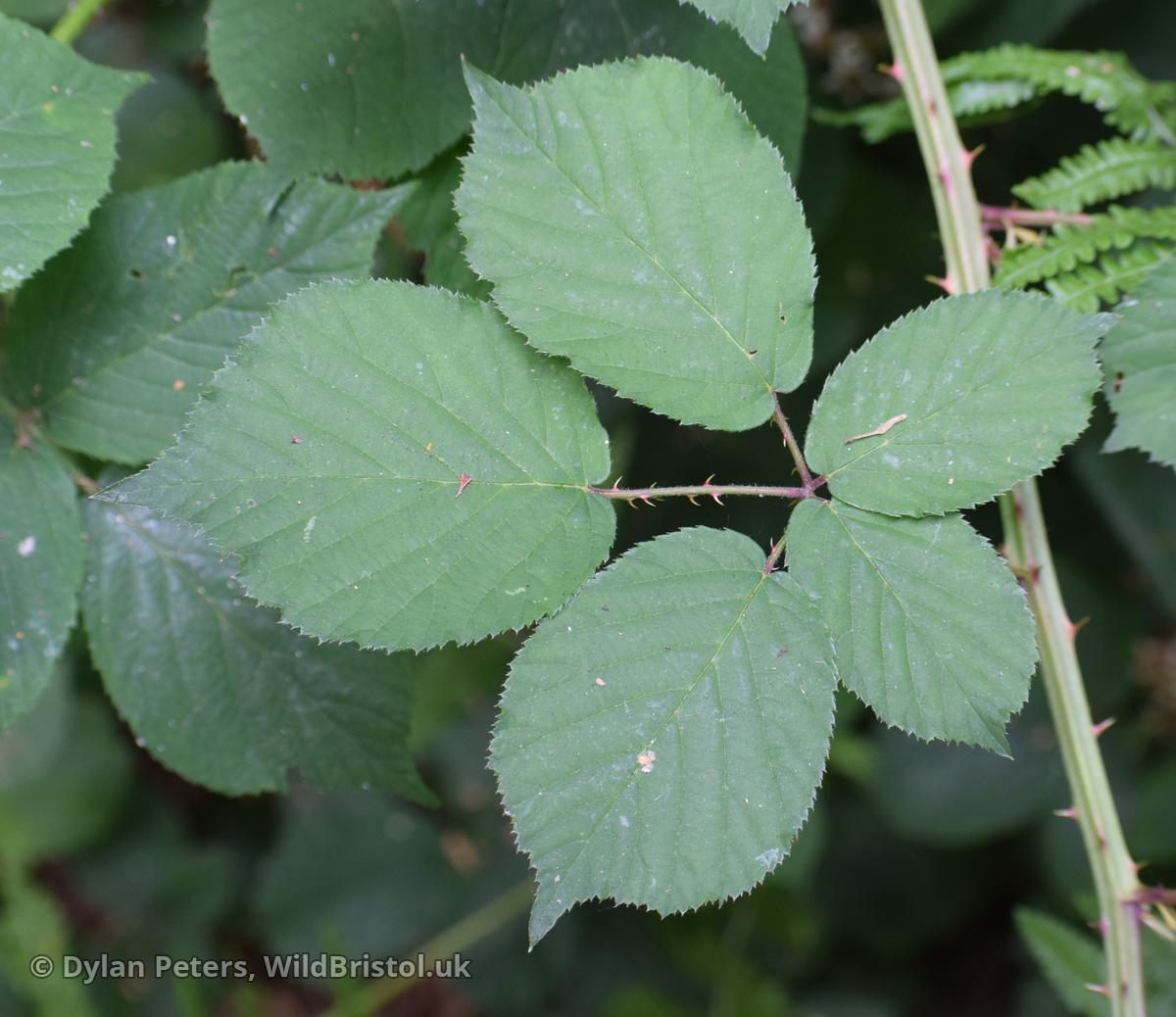
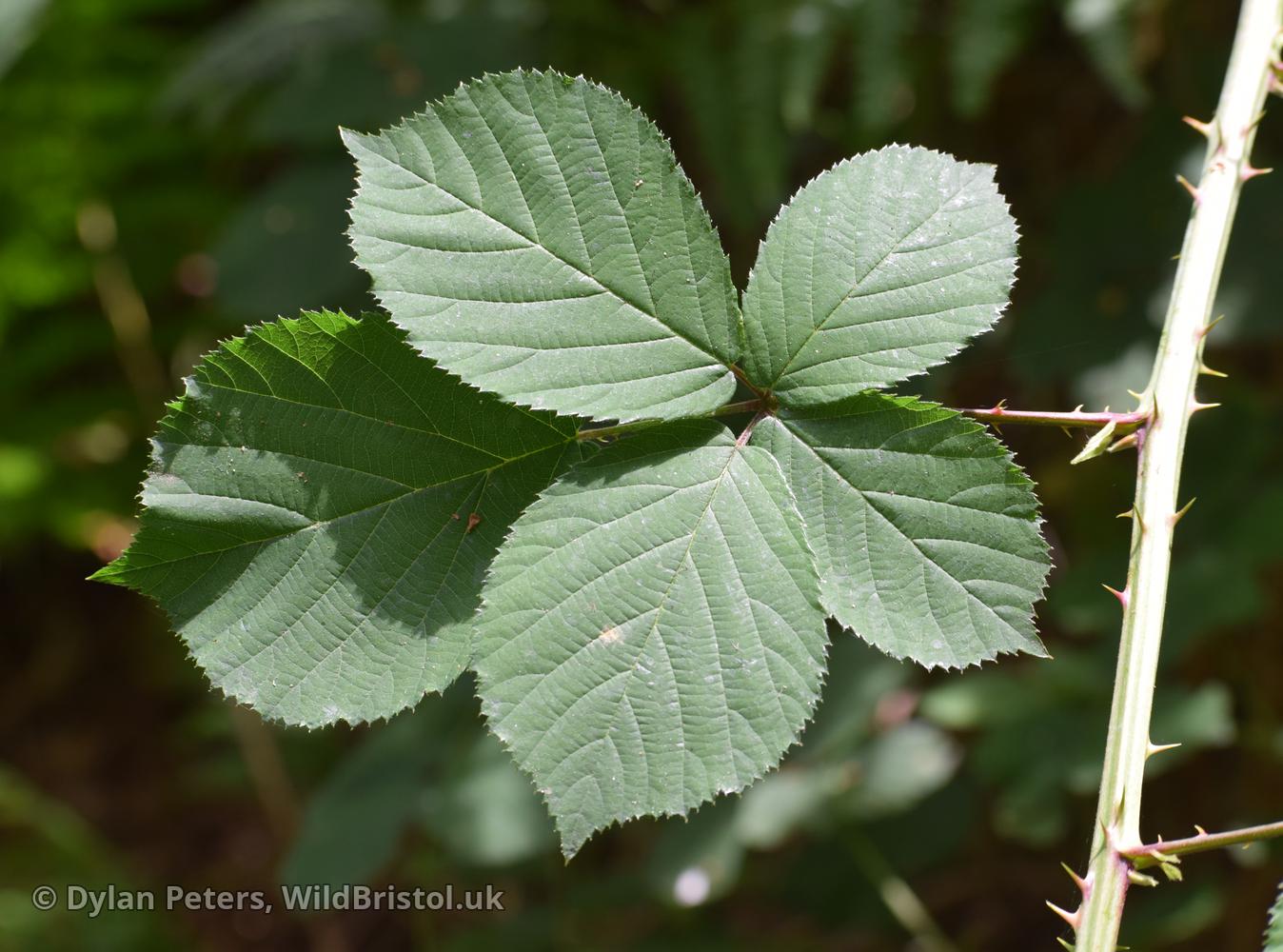
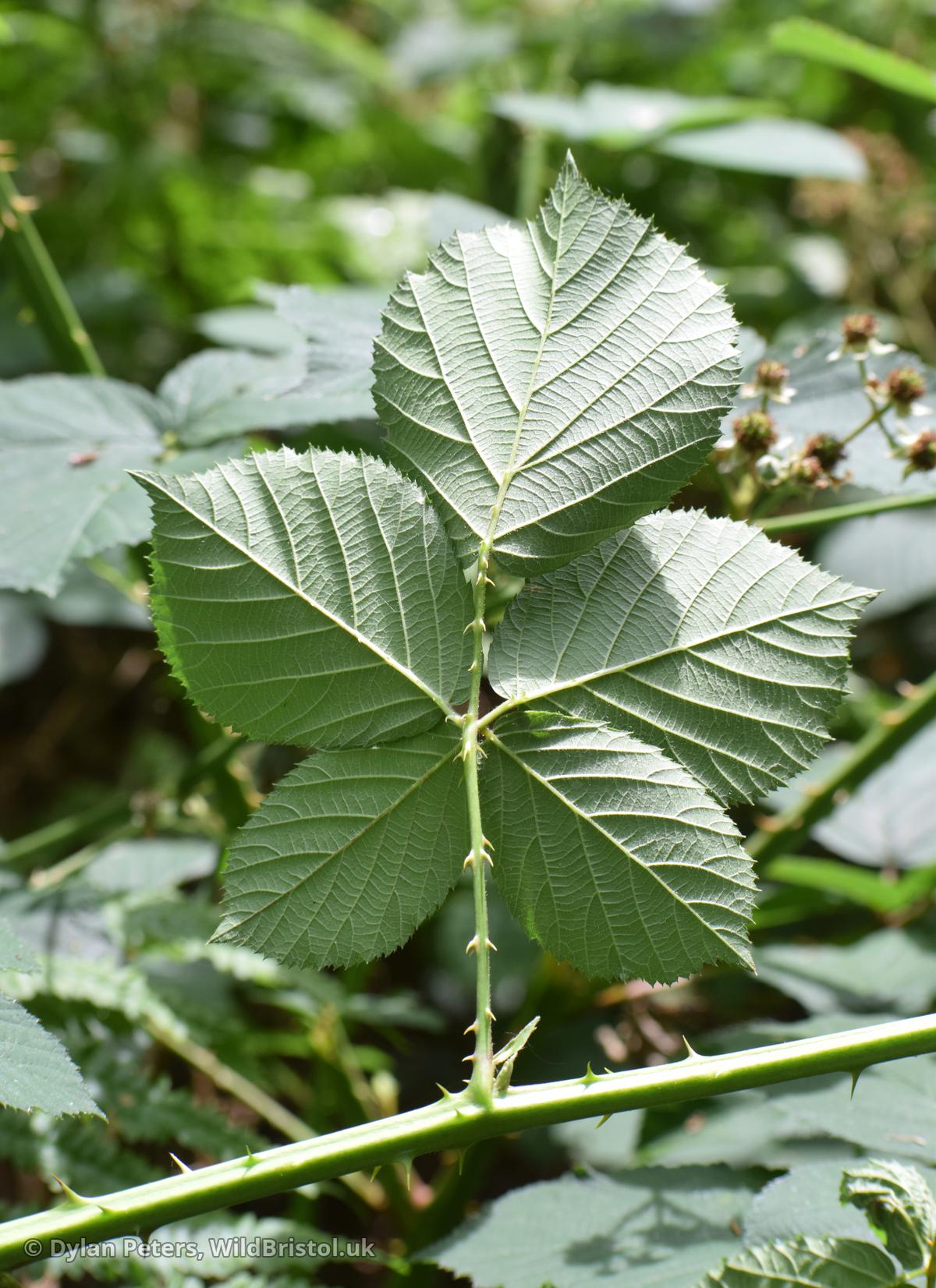
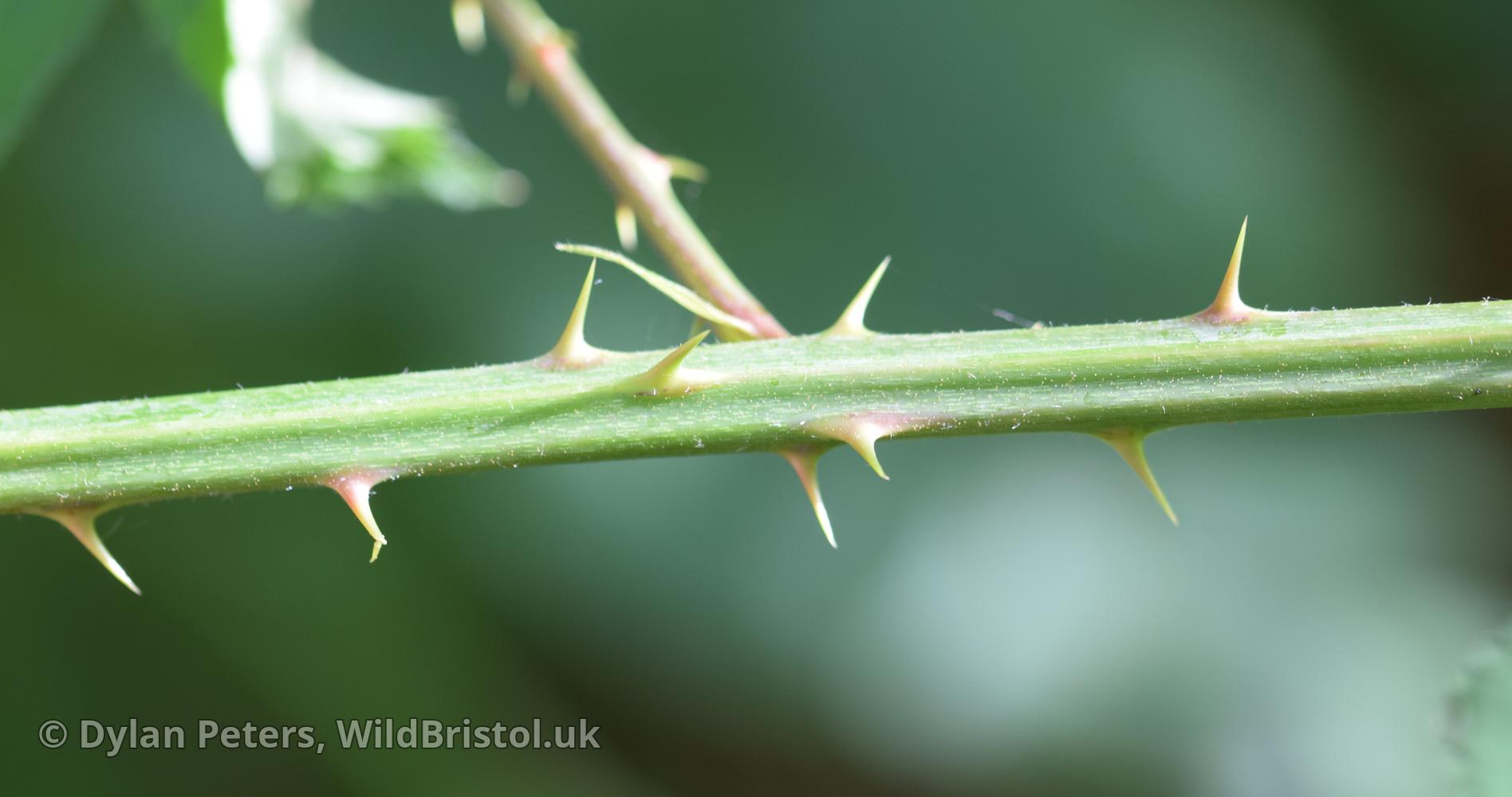
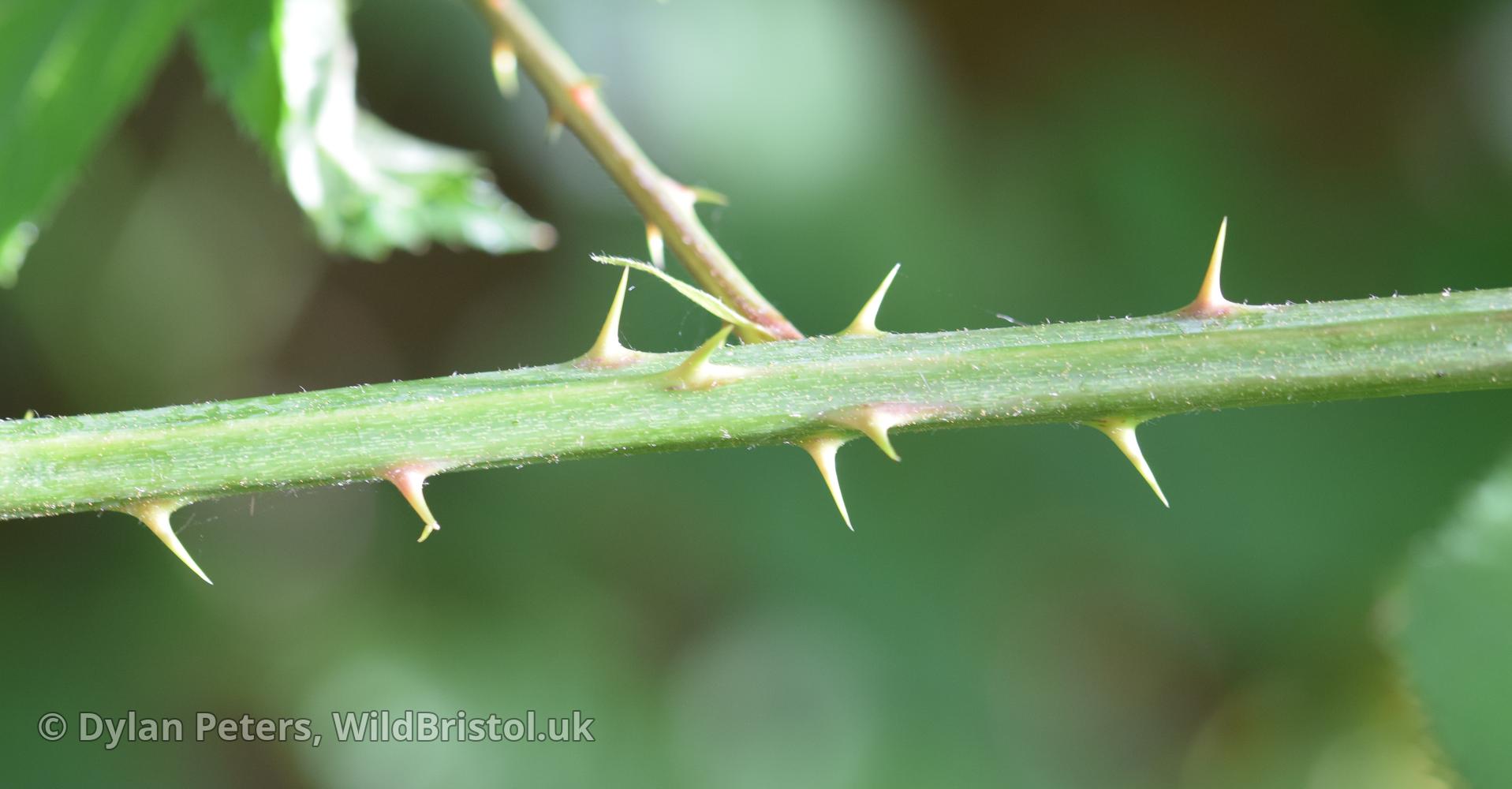
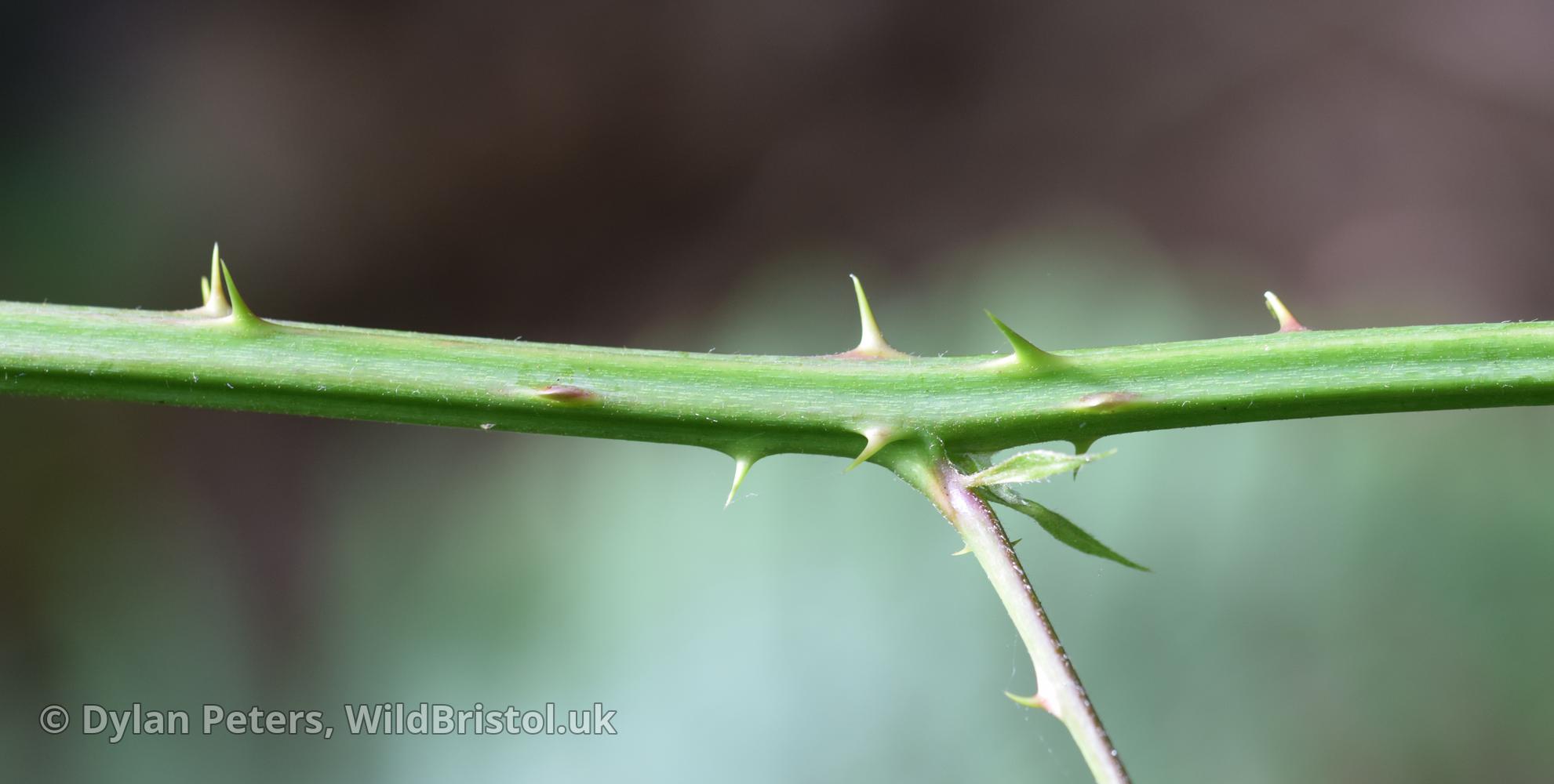
Stem arching, angled, furrowed, pinkish-grey becoming light red with mainly sparse, simple and tufted hairs and scattered longer hairs, and with few to rather many sessile, subsessile and very short-stalked glands. Prickles 8-18 per 5 cm on the angles, sometimes in pairs, strong, long and abruptly needle-like from a broad base, sharply declining or curved, 7-10 mm, reddish brown, or red with a yellow tip in exposure. Leaves subpedate, not contiguous, dark green and pilose above, especially along the veins, shortly pilose below, with a covering of short, simple and tufted hairs. Terminal leaflet 5.5-8 x 7·5-10 cm, including the narrow-based terminal cusp, 1·5-2 cm, obovate, the base entire or emarginate, the margin more or less evenly serrate, though the principal teeth are sometimes retrorse, the petiolule 2/5 as long as the lamina. Petiolules of basal leaflets 3-5 mm. Petiole to twice as long as the basal leaflets, brown, or reddish brown, pilose, with numerous short, simple and tufted hairs, sessile glands, very short-stalked glands, and about 12 sharply deflexed or somewhat curved yellowish prickles. Flowering branch with 3-foliate leaves below and often 1-2 simple leaves above, not leafy to the apex. Inflorescence lax, with few or rather many, wiry, ascending, divaricate peduncles divided above the middle, the branches 3-7 flowered, set at 60-90° to the peduncles, 1-3 cm. Rachis slightly flexuose, brownish purple with numerous to dense, short to medium simple and tufted hairs, few to occasionally many subsessile glands, and fairly many sharply declining yellowish prickles 3-6 mm. Pedicels slender, wiry, with dense short hair and fairly numerous simple longer hairs, and numerous slender, slanting yellowish prickles 3-5 mm. Flowers 2·5 cm diameter. Sepals greyish-green with a white border, with dense appressed hairs and scattered, long simple hairs, reflexed. Petals milk-white, slightly obovate, 8-9 x 4 mm, pilose on the margin, scarcely contiguous. Stamens exceeding the styles, filaments white, anthers glabrous, styles green, carpels and receptacle glabrous. Unripe fruit brownish-red. Flowering from late June to early August.
Diagnostic features: the long, hard, slender and needle-like declining prickles which are frequently in pairs; the neat, obovate terminal leaflet with a long, narrow-based cusp, and the ample panicle with long, wiry, divaricate branches, or occasionally with a broad-truncate terminal panicle, the branches interwoven. Flowers milk-white.
HOLOTYPUS: Howard's Common, Belton near Great Yarmouth, GR TMl47S.02S, v.c. 25, 23 July 1993, A . L. Bull (BM). Isotype in herb. A. Newton. The name gariannensis is derived from Gariannonum, the well preserved Roman fort at Burgh Castle, 2 km north of the type locality.