Rubus 'Bristol Botanic Garden' - Bristol Botanic Garden Bramble
Favourite Photos
Species Description
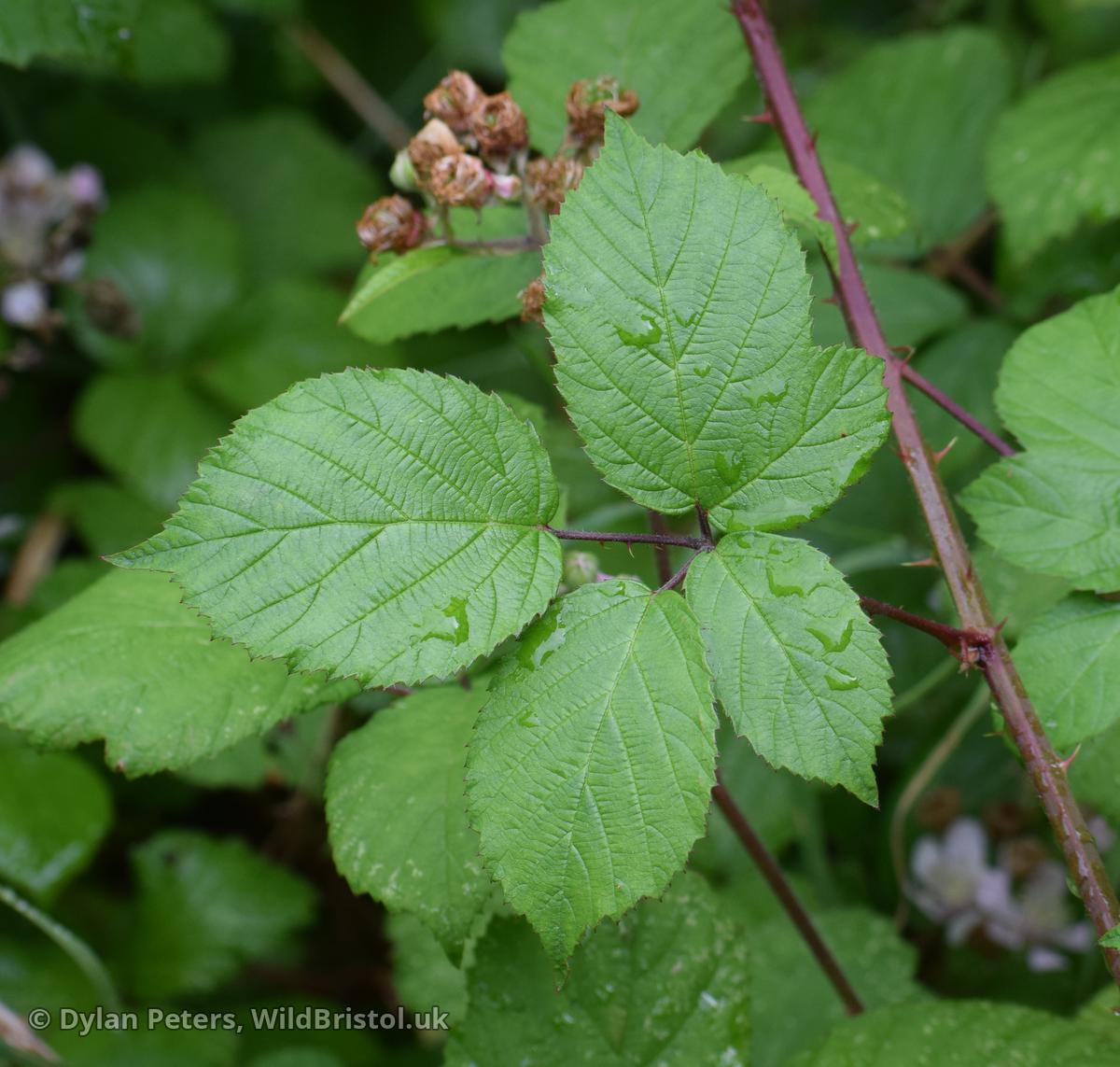
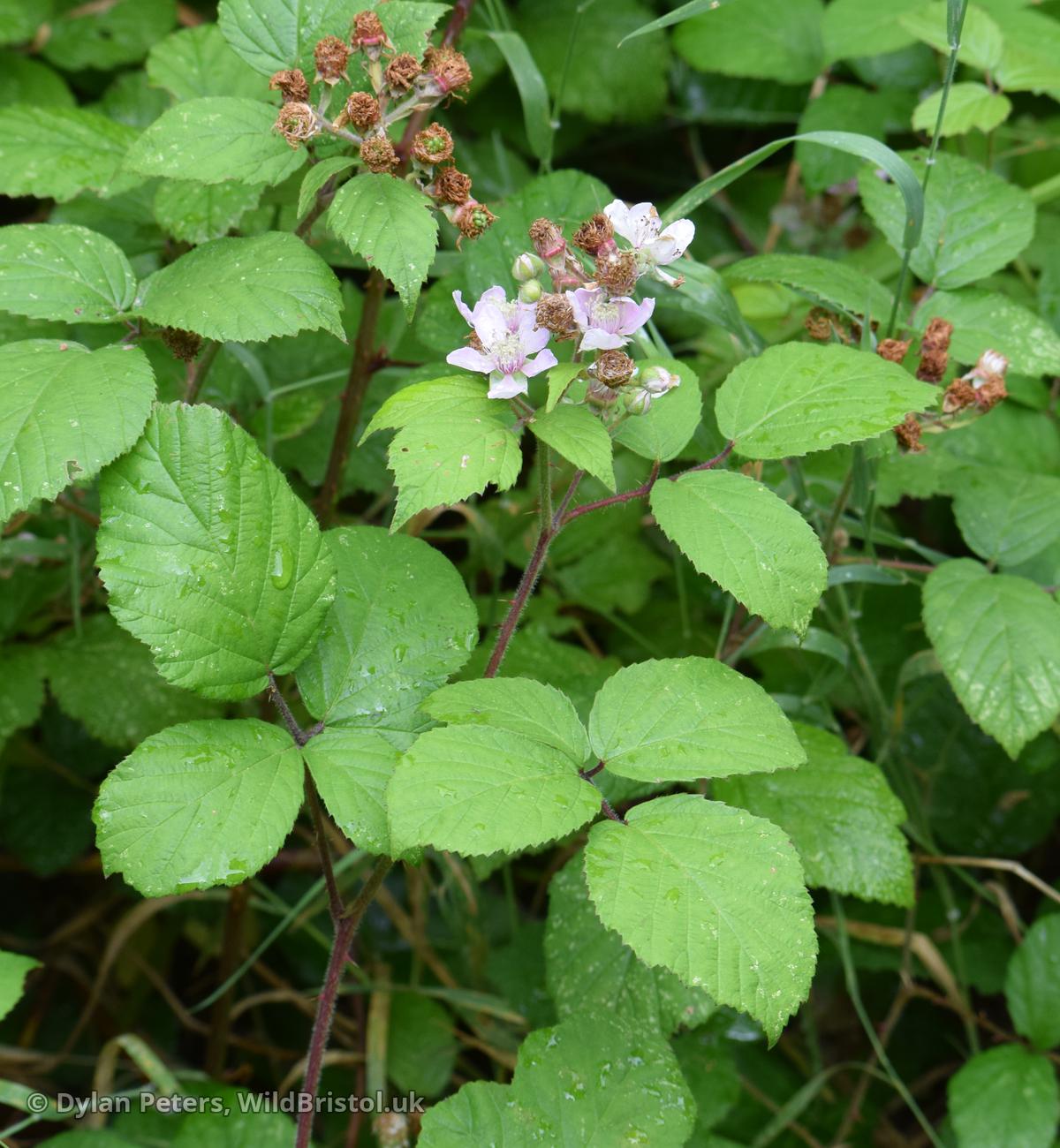
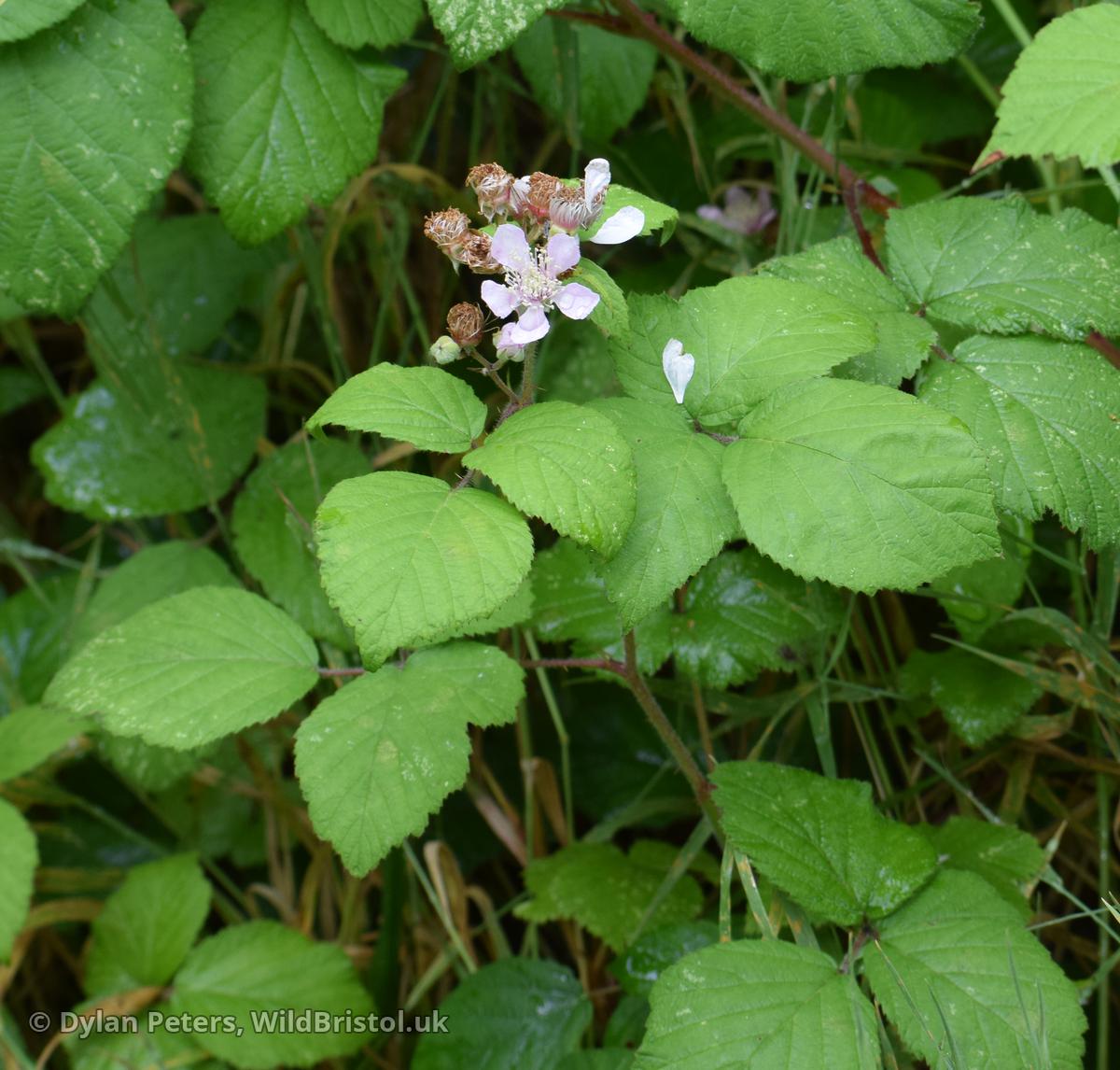
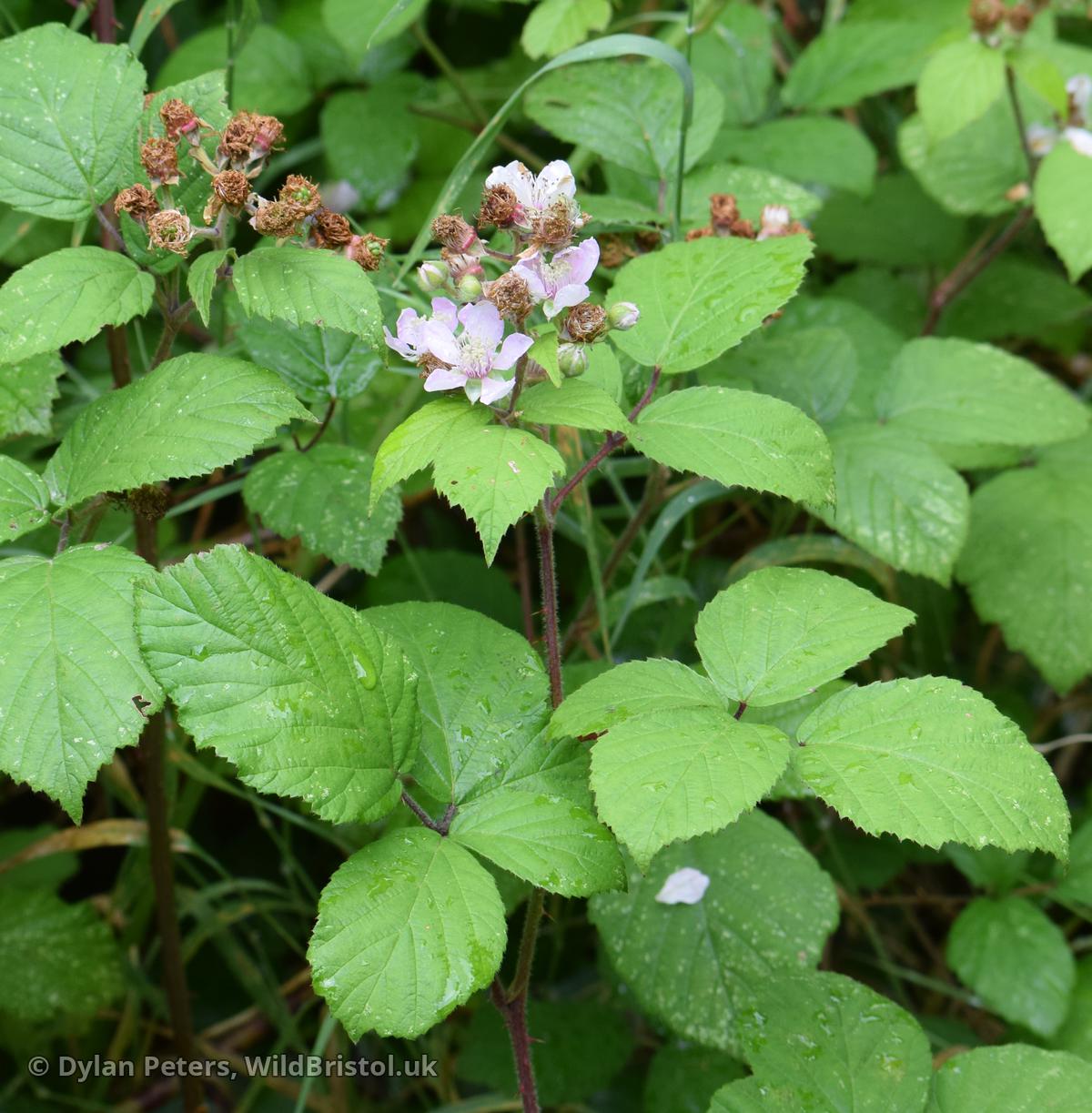
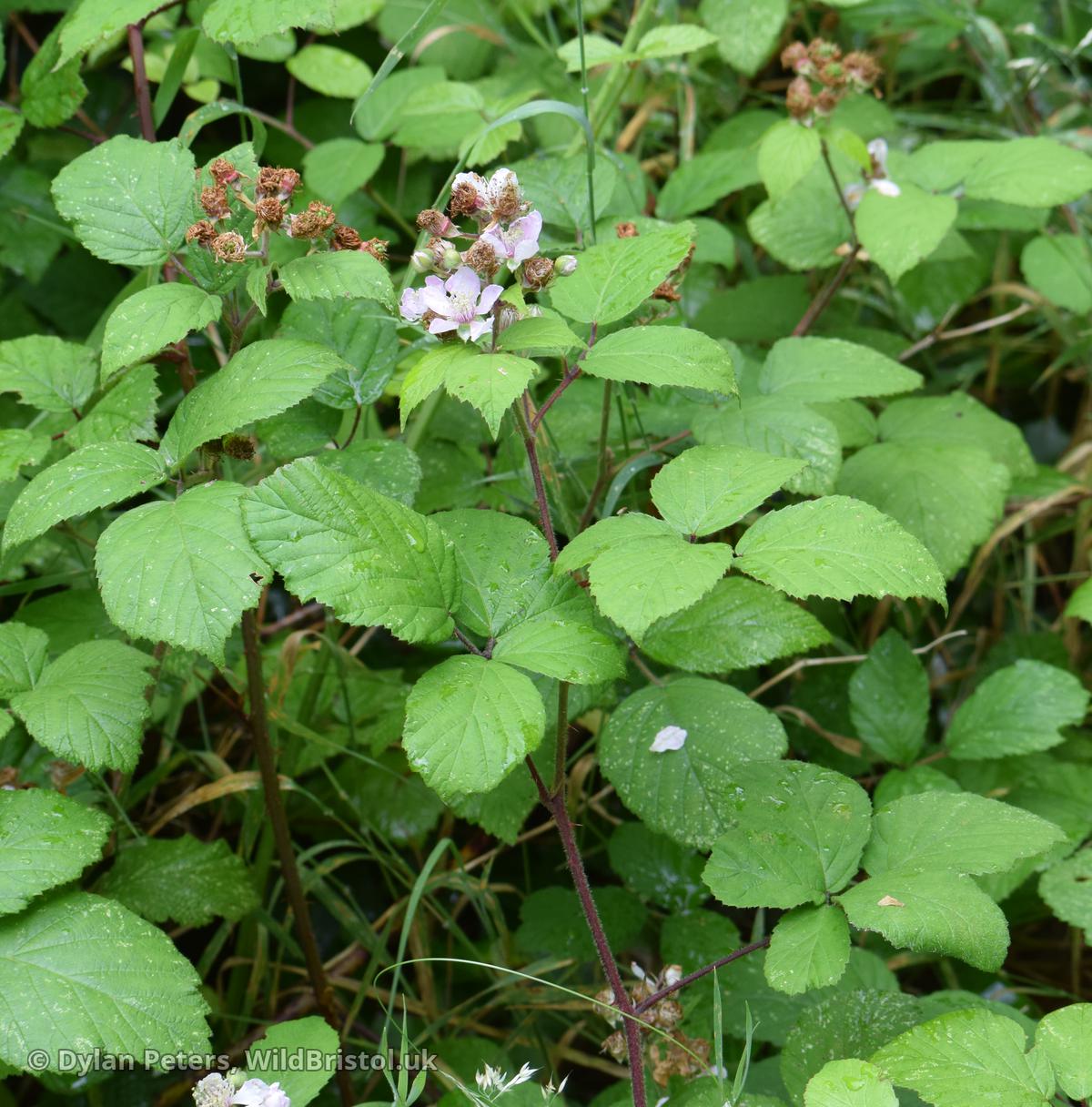
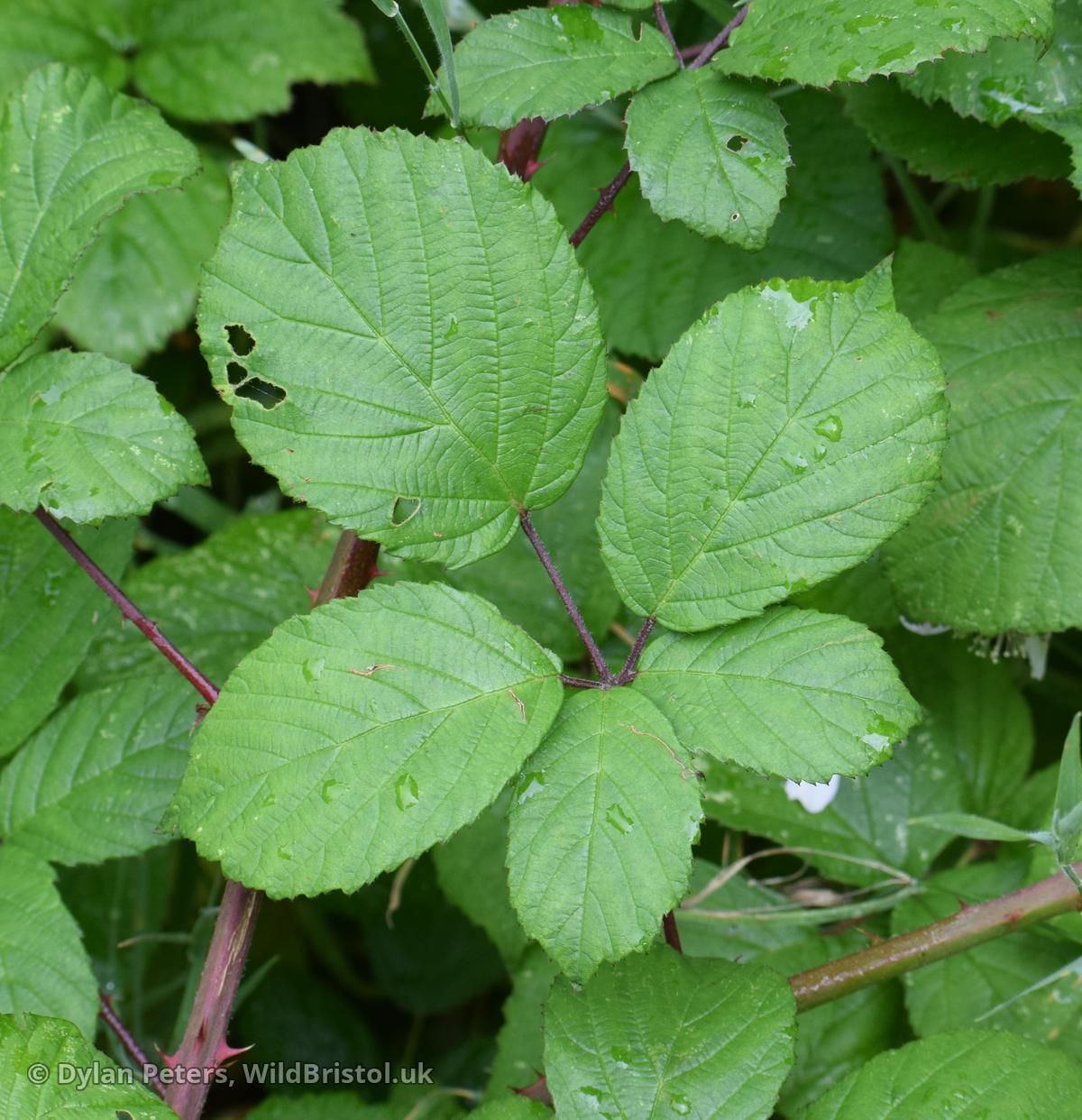
A large patch found growing at the far end of Bristol Botanic Garden in the Woodland section. It appears to be allied to the R. rubritinctus group (R. rubritinctus, R. rhombifolius, R. daveyi, R. diversiarmatus) and has a general aspect of R. lanaticaulis - which is what I thought it was originally but that should have a much hairier stem, white styles and patent-erect, leafy-tipped sepals. Here they are thinly hairy with pink styles (deep pink at base) and short reflexed, non-leafy-tipped sepals. It has probably arisen from a cross between R. rubritinctus (which was growing nearby) and R. lanaticaulis.
If using Edees & Newton it keys out best to R. daveyi; particularly as the filaments appear to be deep pink at the base and white at the top. It differs in having pedate (not digitate) leaves with a much shorter petiolule - about 1/3 as long as the lamina (not 1/2), terminal leaflets with a more acuminate-cuspidate apex, which is often twisted or curved to one side and broader-ob-elliptic in outline.