Dewberry - Rubus caesius
Favourite Photos
Species Description
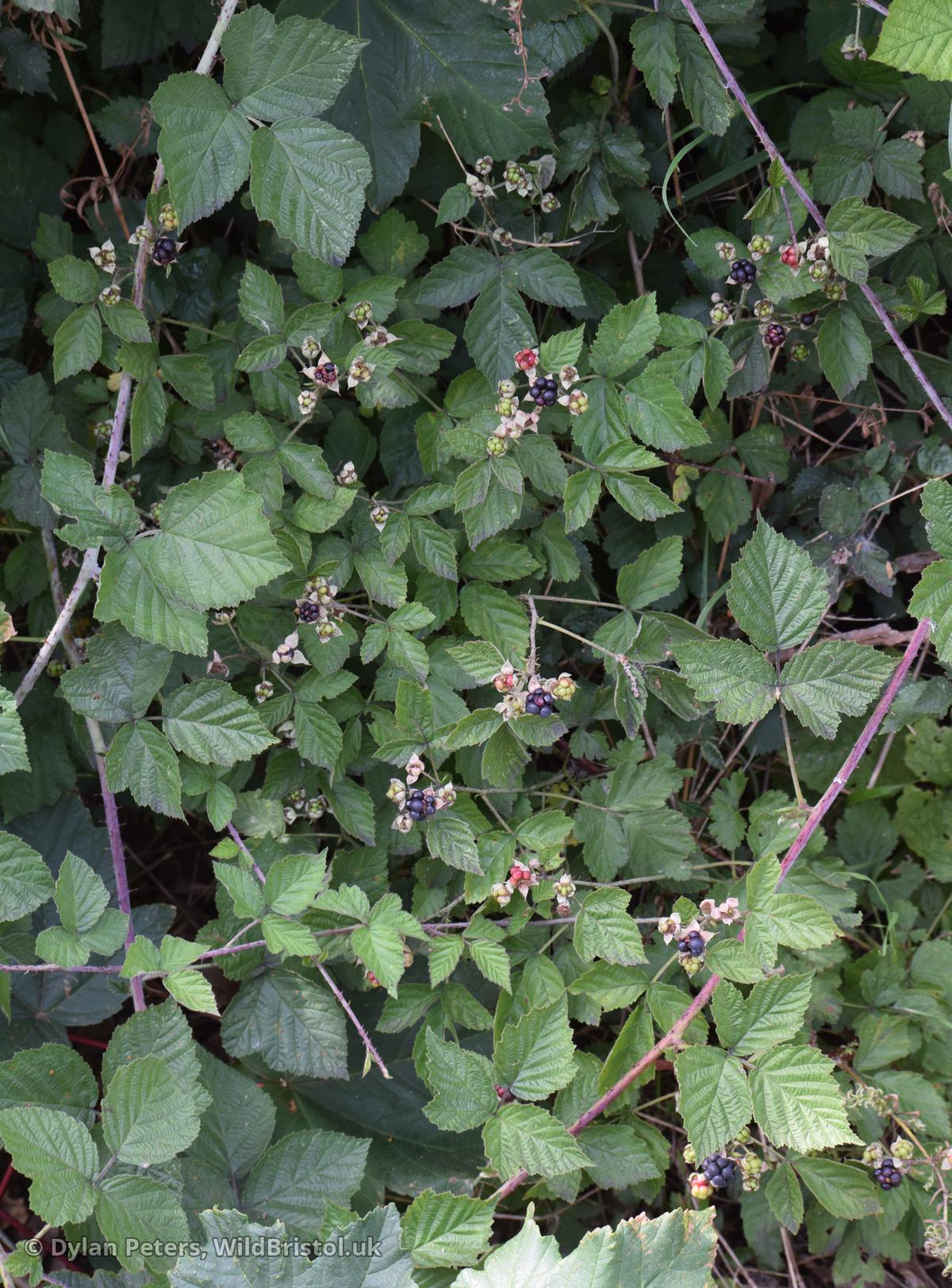
Common and widespread in the south, becoming more scarce in the north. Habitat includes: Damp, rocky, basic soils, often in trampled places such as besides tracks, wasteland, grassland, scrub, lane-sides, hedgerows, woodland, fen carr, semi stable dunes, roadside verges, railway banks etc. It is often the only species to be met with in limestone districts other than R. ulmifolius.
ID:
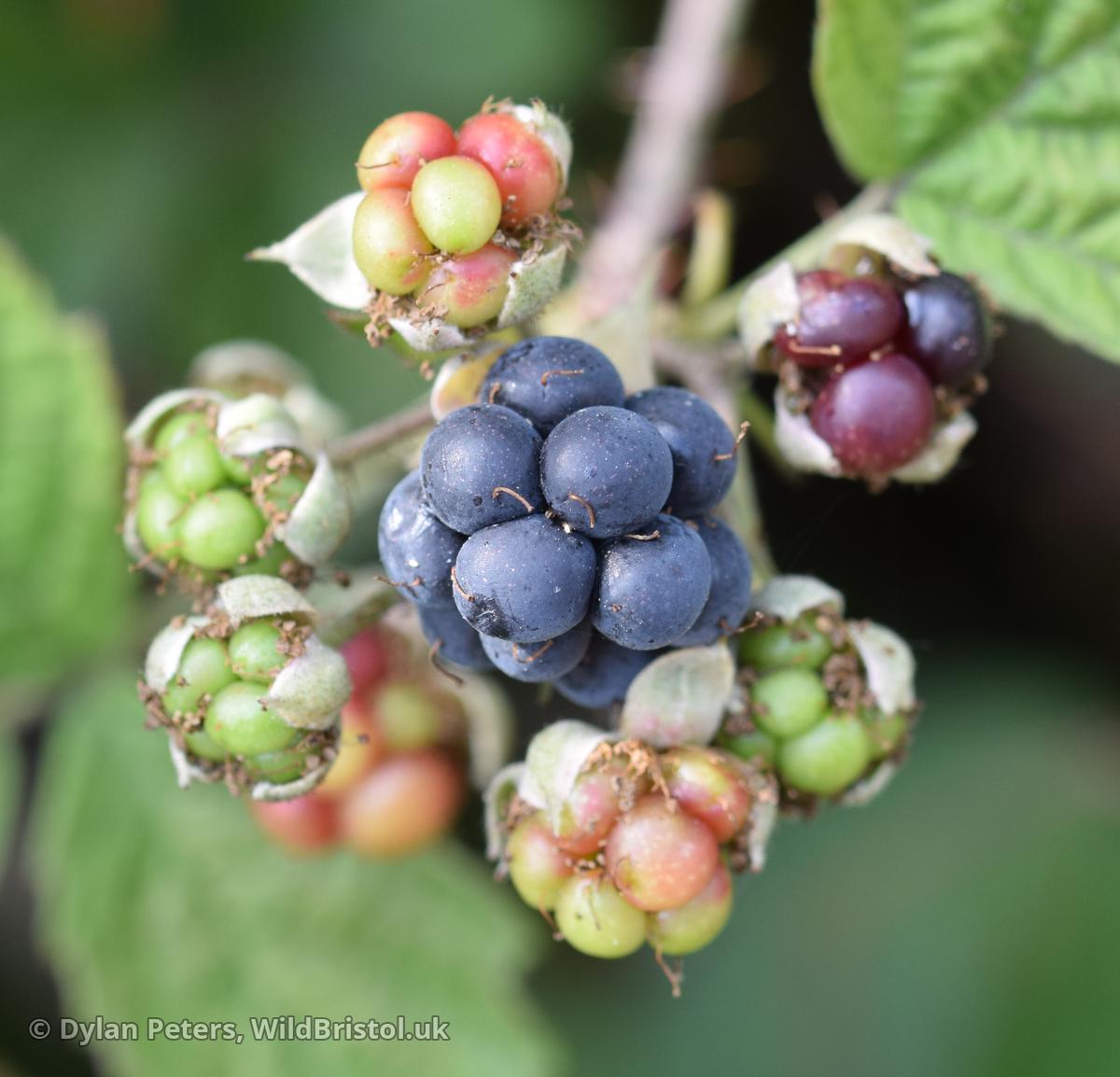
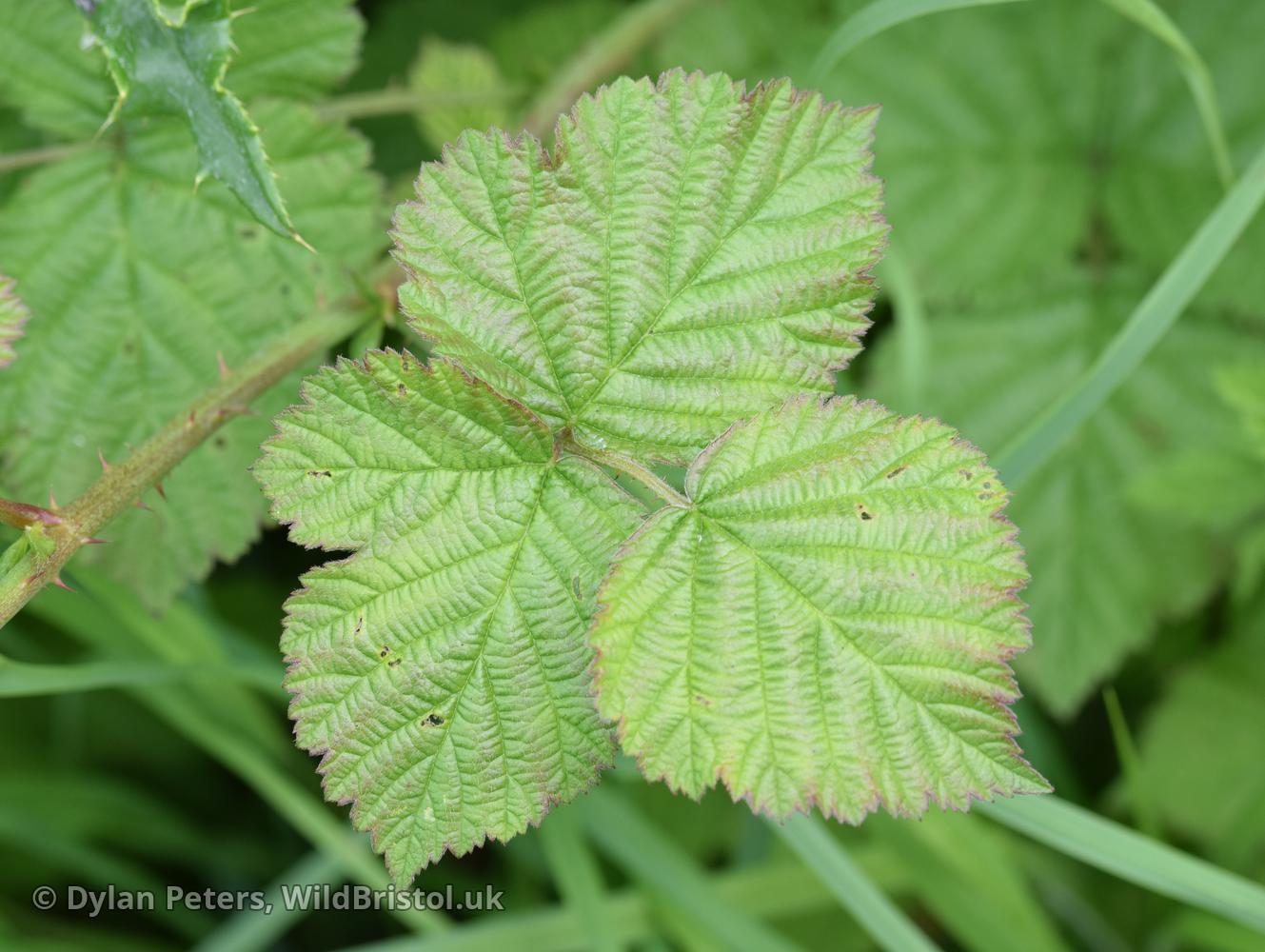
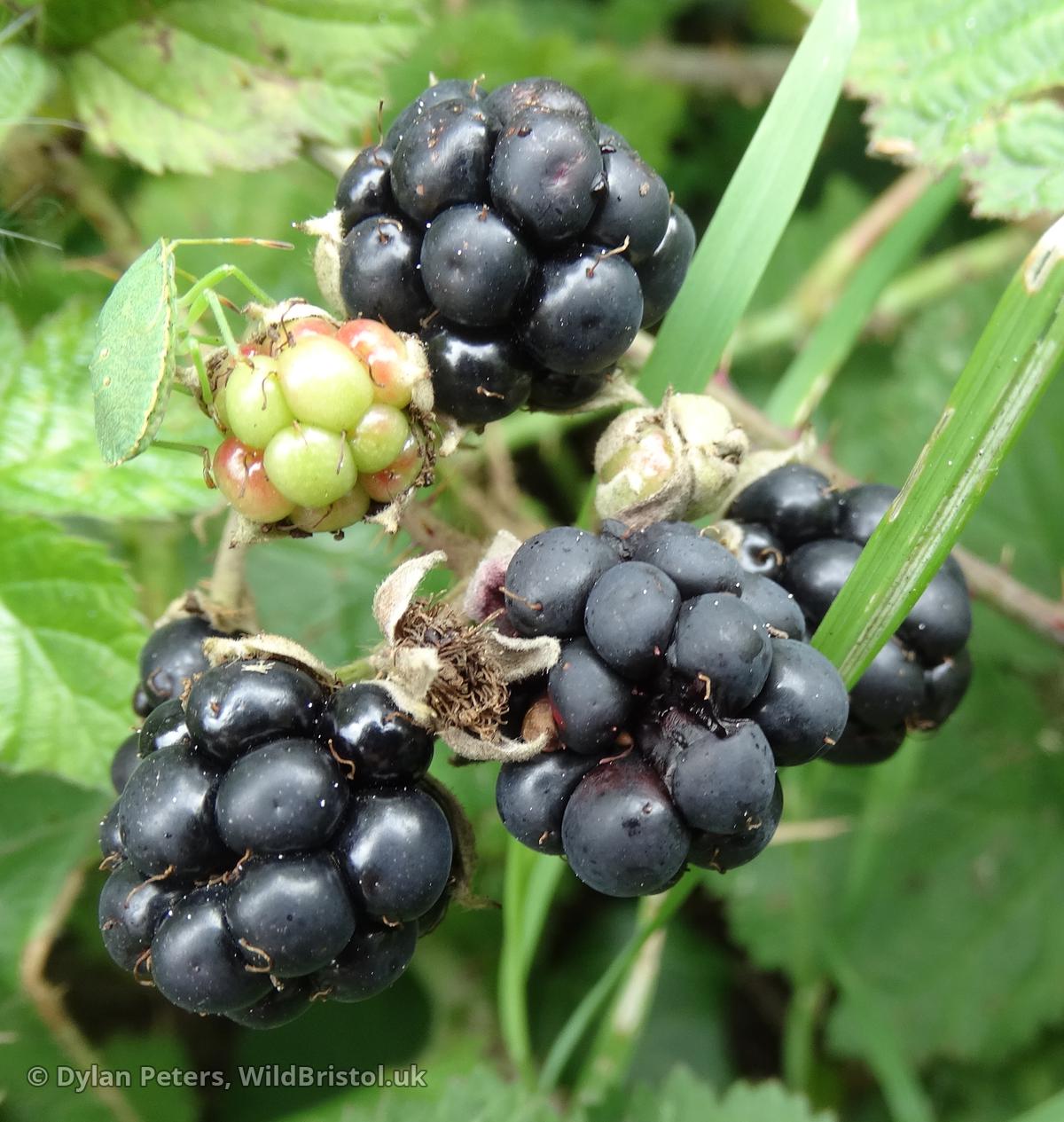
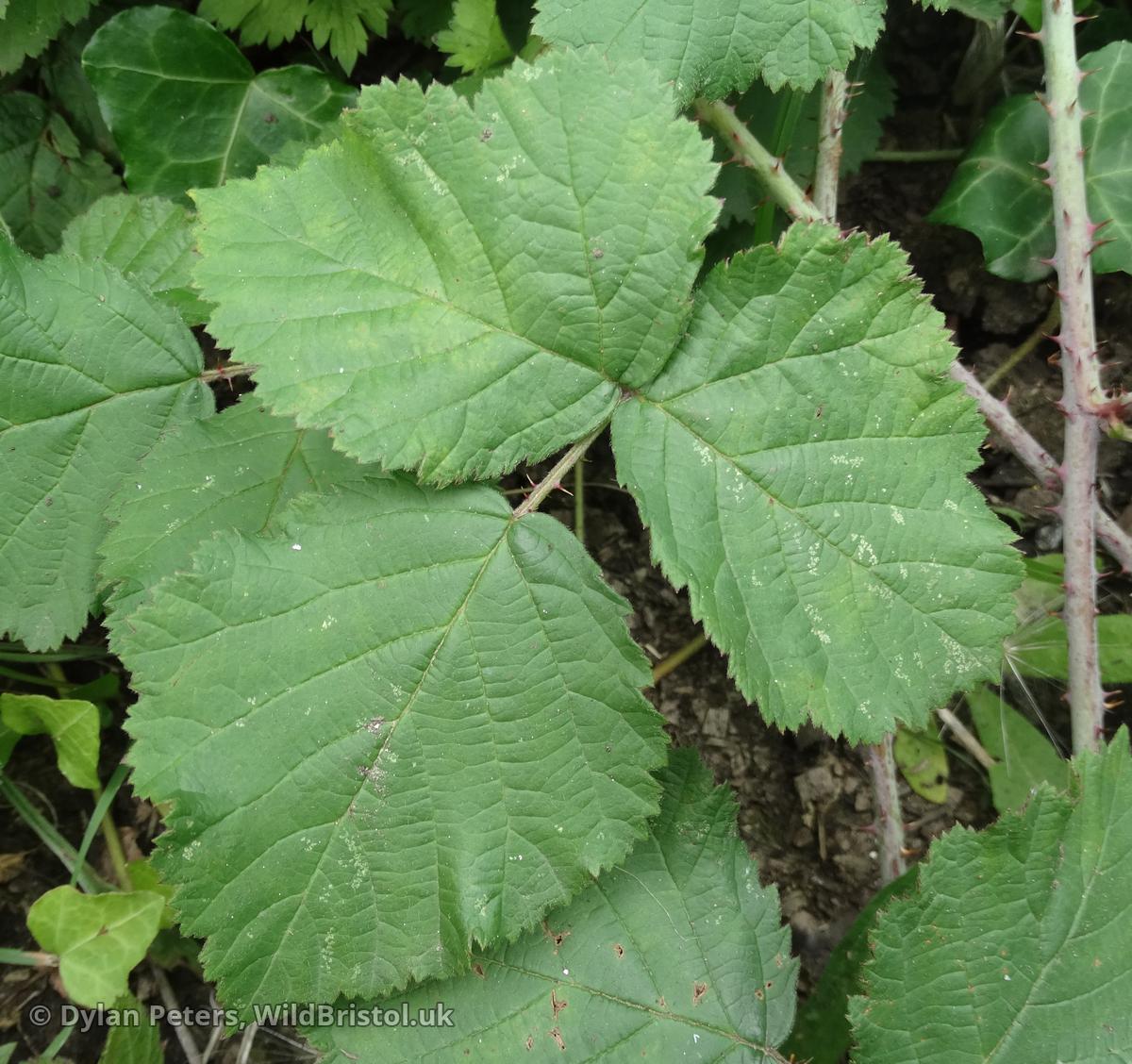
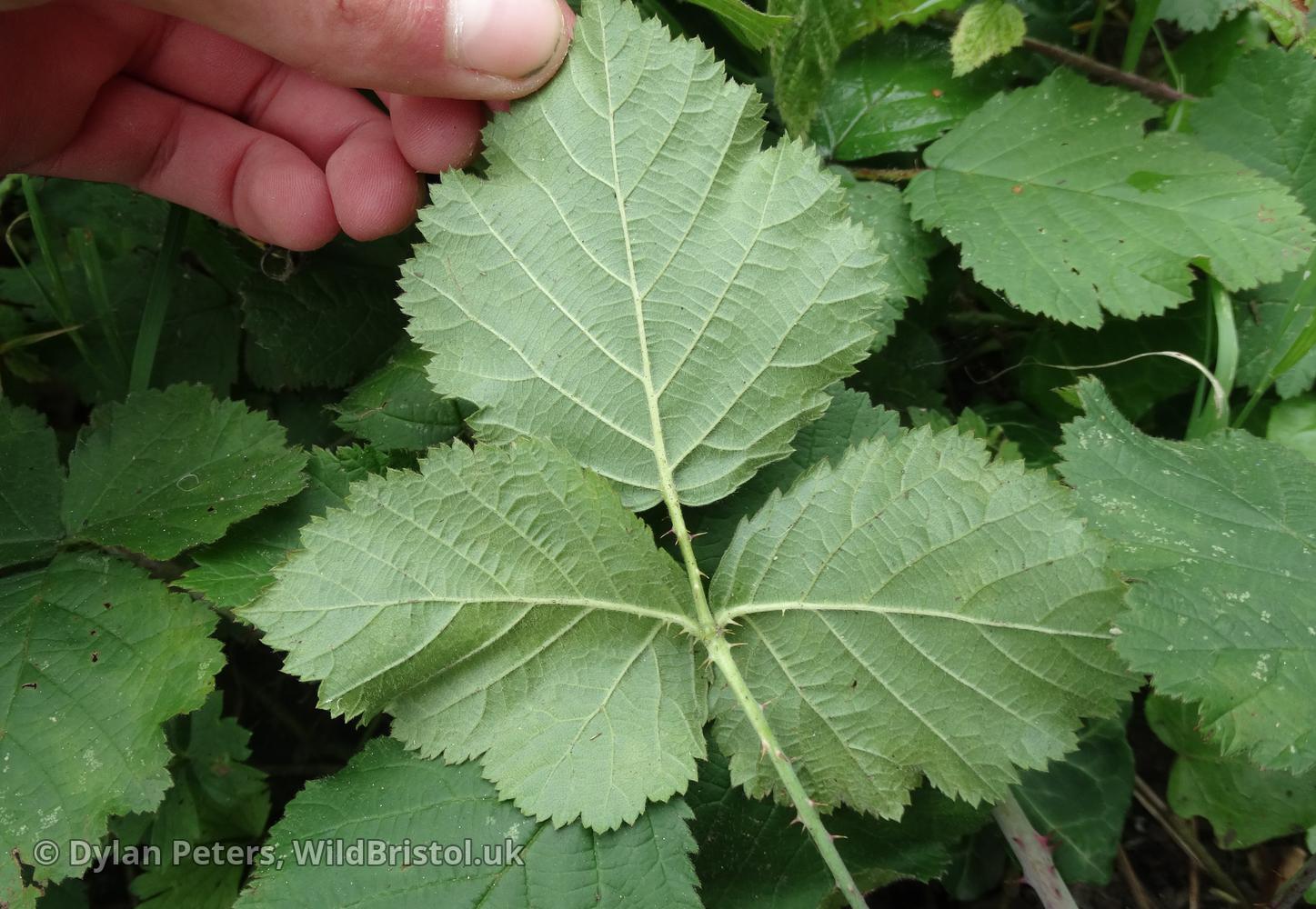
One of the easiest species to recognise but also one of the trickiest to describe on account of its variability. Best told by its low scrambling habit with low-arching to procumbent, spindly stems (<c.8mm in diameter) which are heavily pruinose and covered in curved to straight and slanting, short, weak, needle-like prickles and often scattered stalked glands; leaflets mostly 3 (the laterals are often bilobed and sometimes separate to produce 5), green and sparsely hairy on underside, inflorescences made up of few-flowered corymbs with characteristically long pedicels; flowers white (rarely pink - though these may have had influence from other species), petals ovate, contiguous (touching / overlapping) patent, often erose, sepal short, ovate, felted and glandular; and the fruits are made up of few large druplets, ripening a bluish-grey and pruinose. Flowers: May to September (I have recorded it during the New Year Plant Hunt, on the 1st Jan 2025).
Numerous varieties are listed as synonyms on Kew (Plants of the World Online) and 3 are described by Watson (1958):
-
var. grandis "A stouter form with large, rugose leaves, closely pubescent beneath, with broad, overlapping petals (often 12-15 in a flower) and broad ovate sepals. Styles and carpels about twice as many as in the typical species. Very common in N.W. Kent; seen in 16, 24, 35, 67"
-
var. deticulatus "Slender. All leaflets regularly denticulate. Gravel Road, Addington, Surrey"
-
var. pinnensis "Robust. Terminal leaflet subcordate-ovate or rhomboid-ovate, gradually acuminate, sharply serrate. By the Pinn Brook, Swakeley's, Uxbridge, Middlesex".
Only the first is given any credence by Edees & Newton (1988).