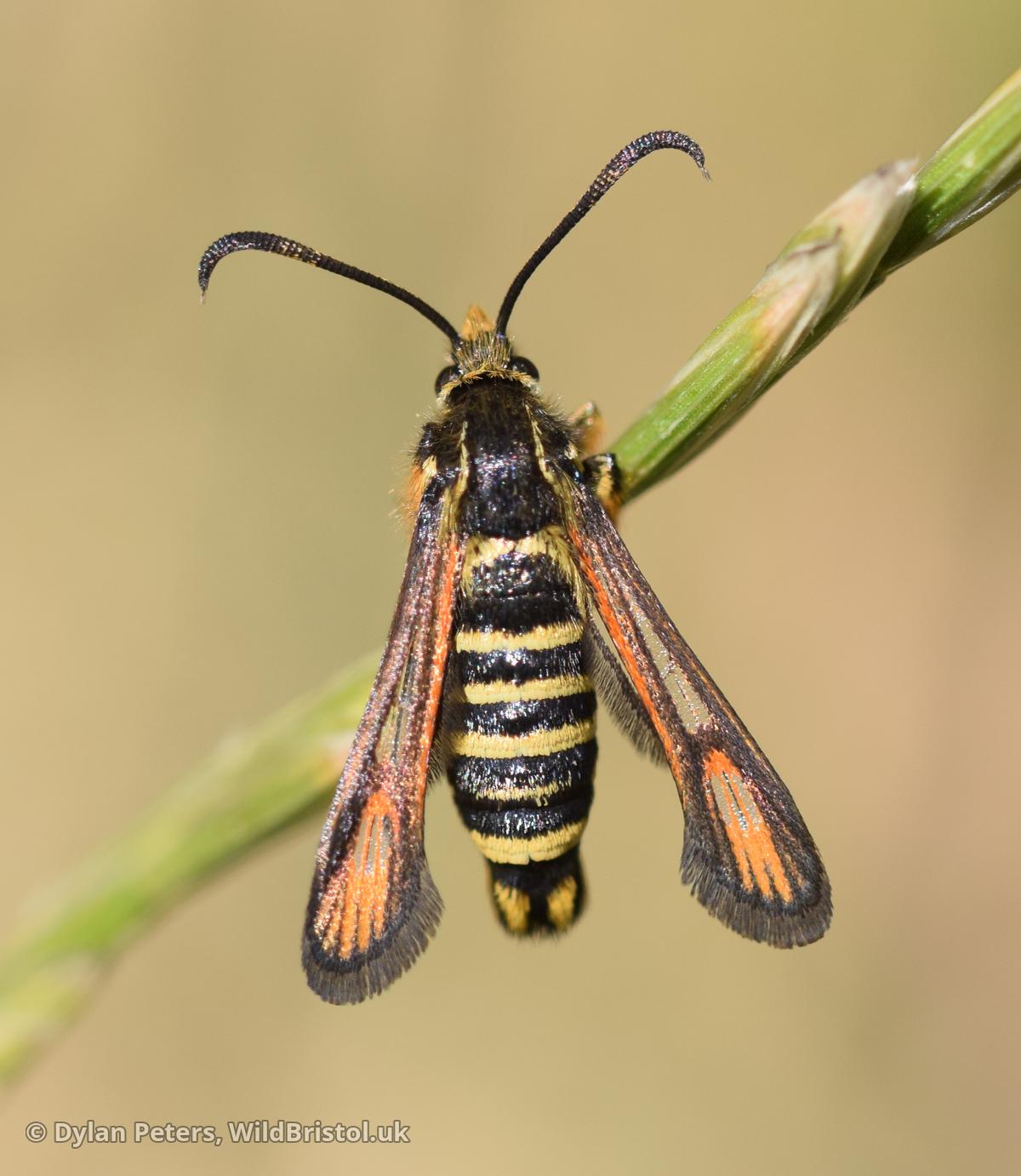
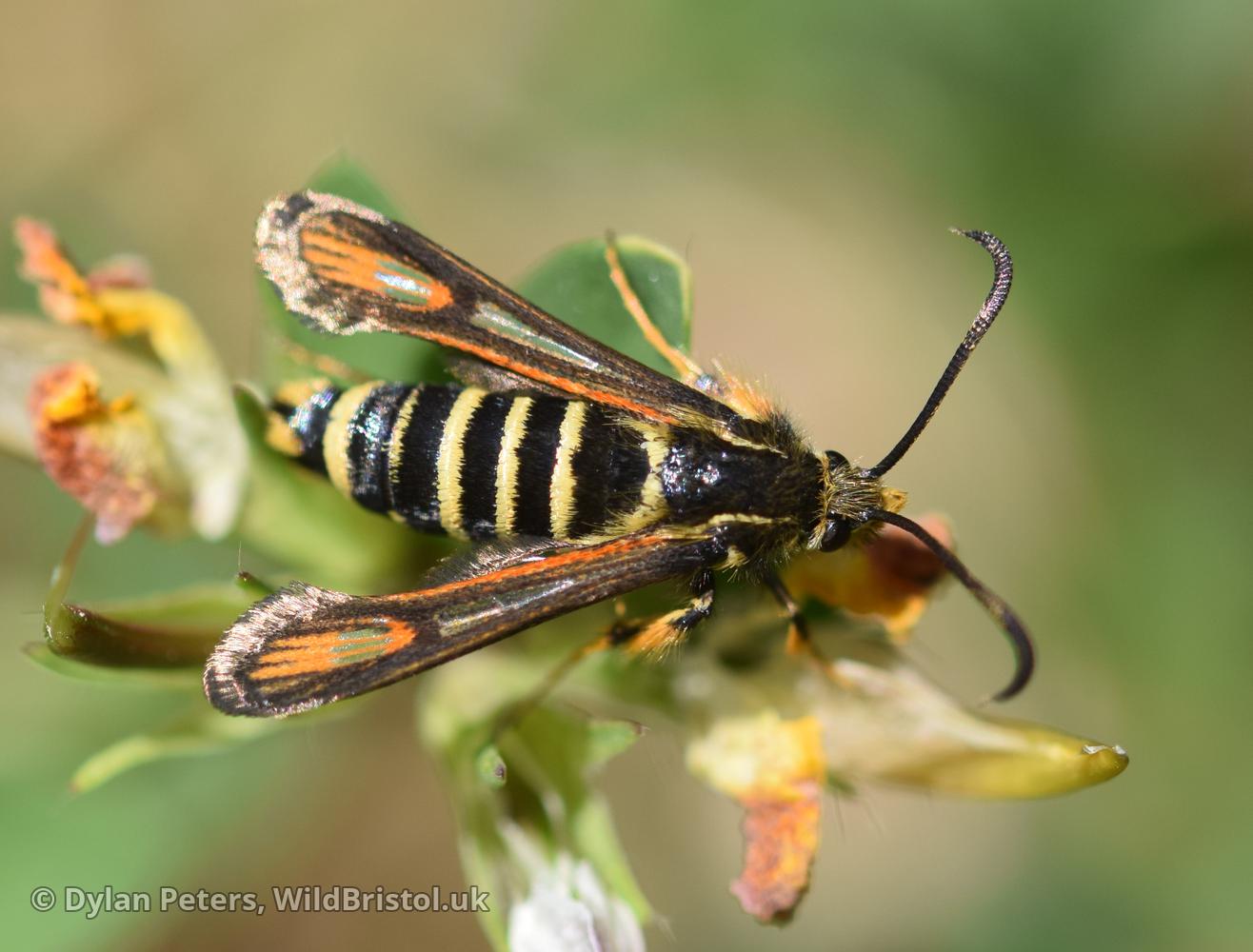
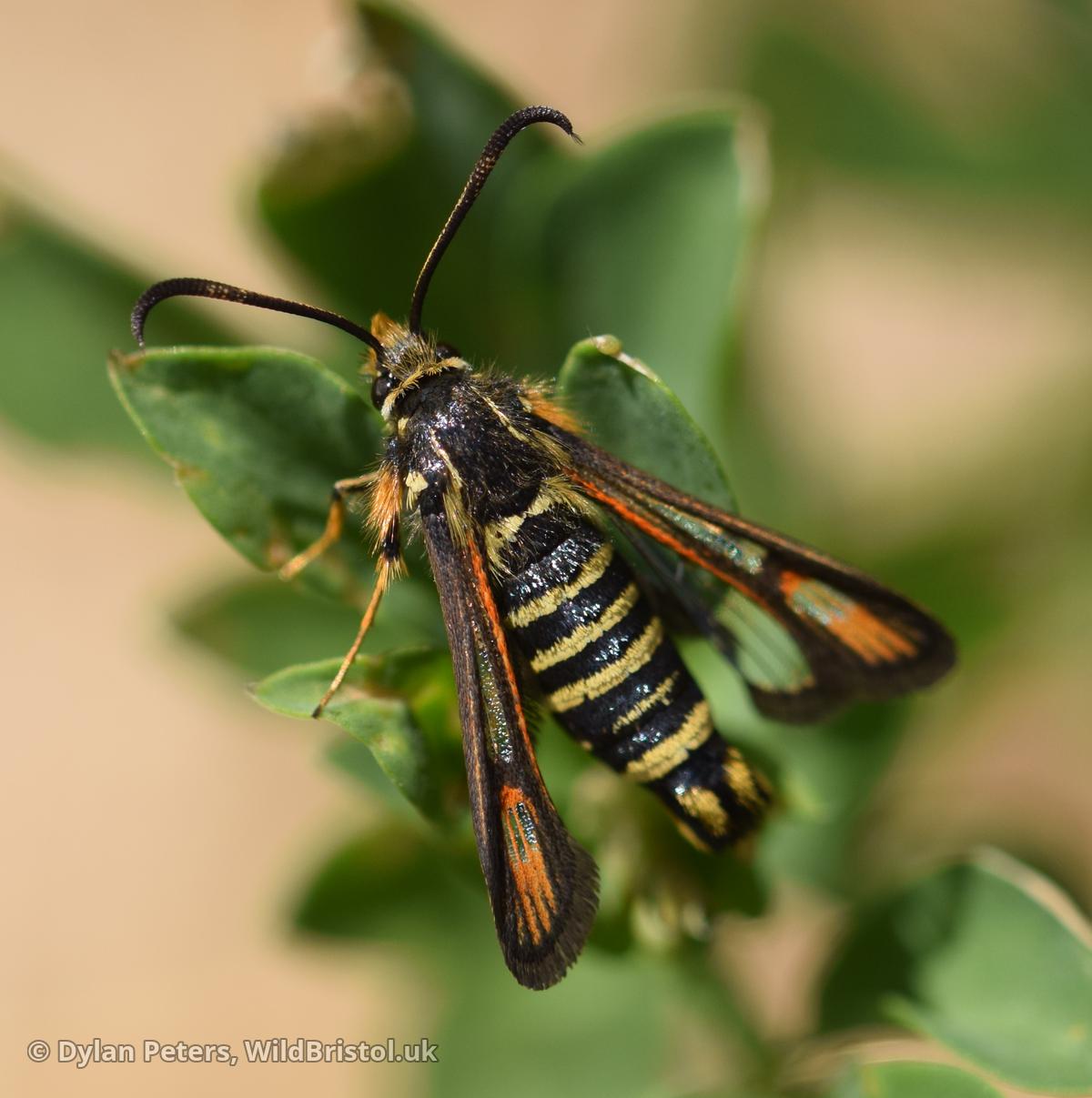
Six-belted Clearwing - Bembecia ichneumoniformis
Favourite Photos
Species Description
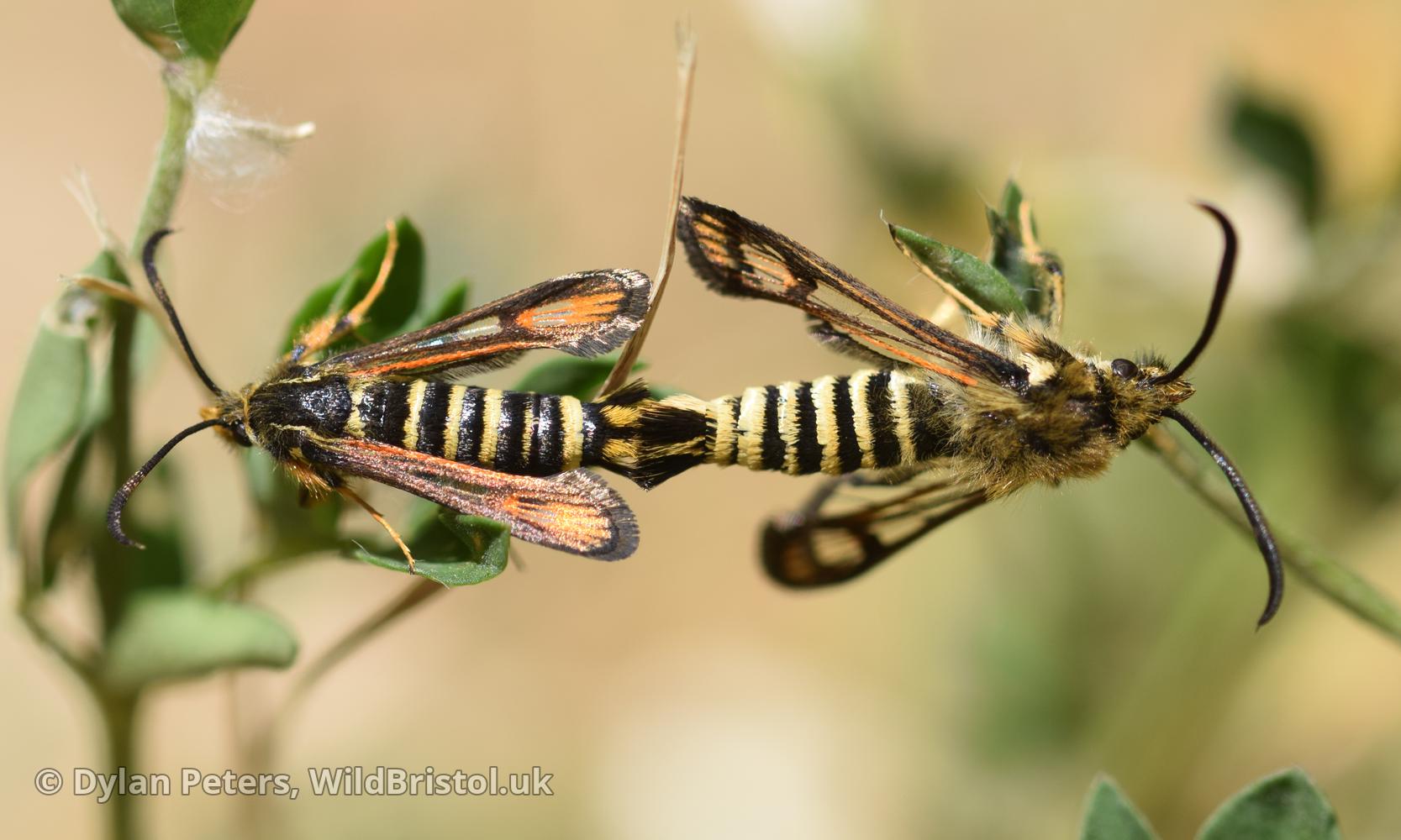
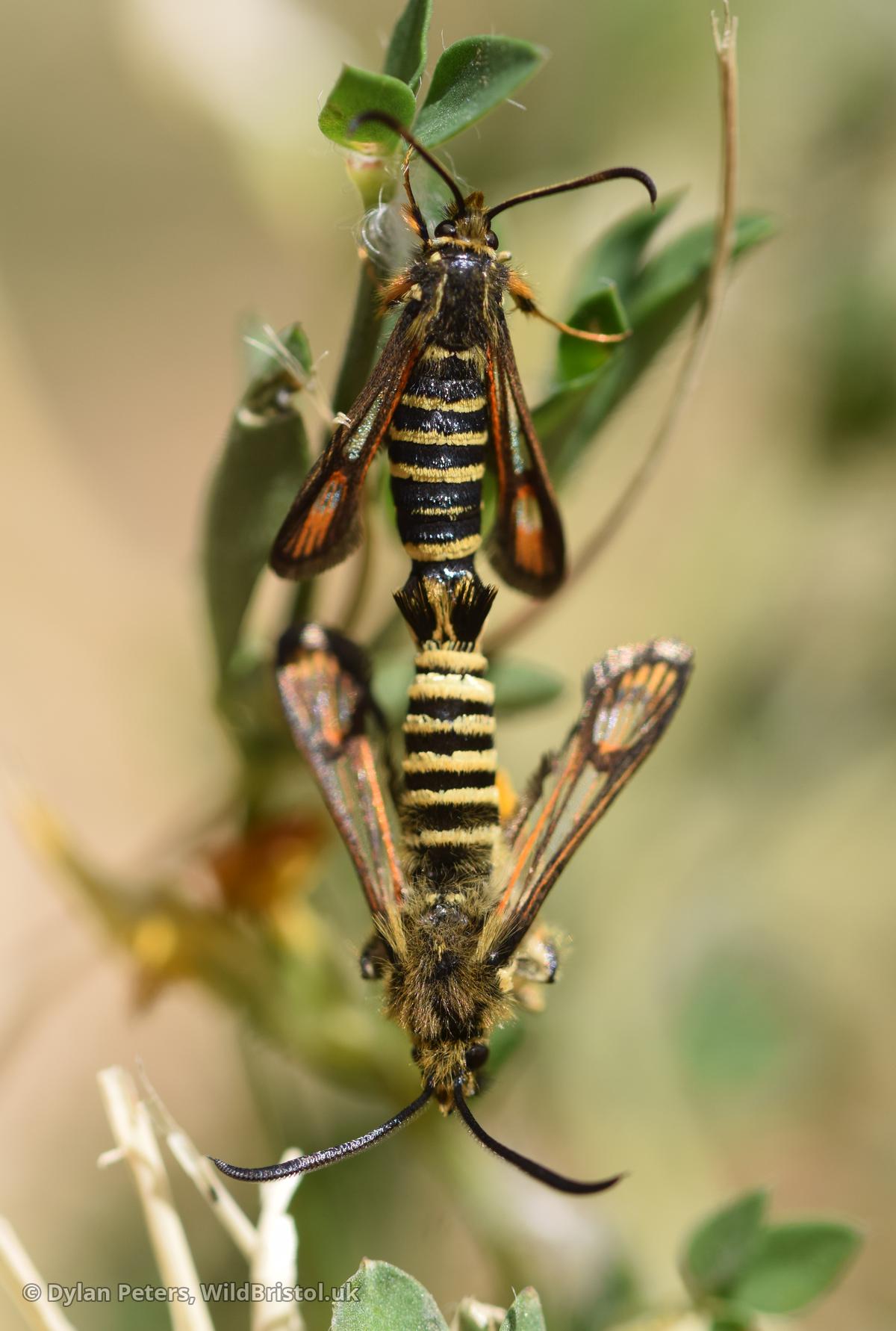
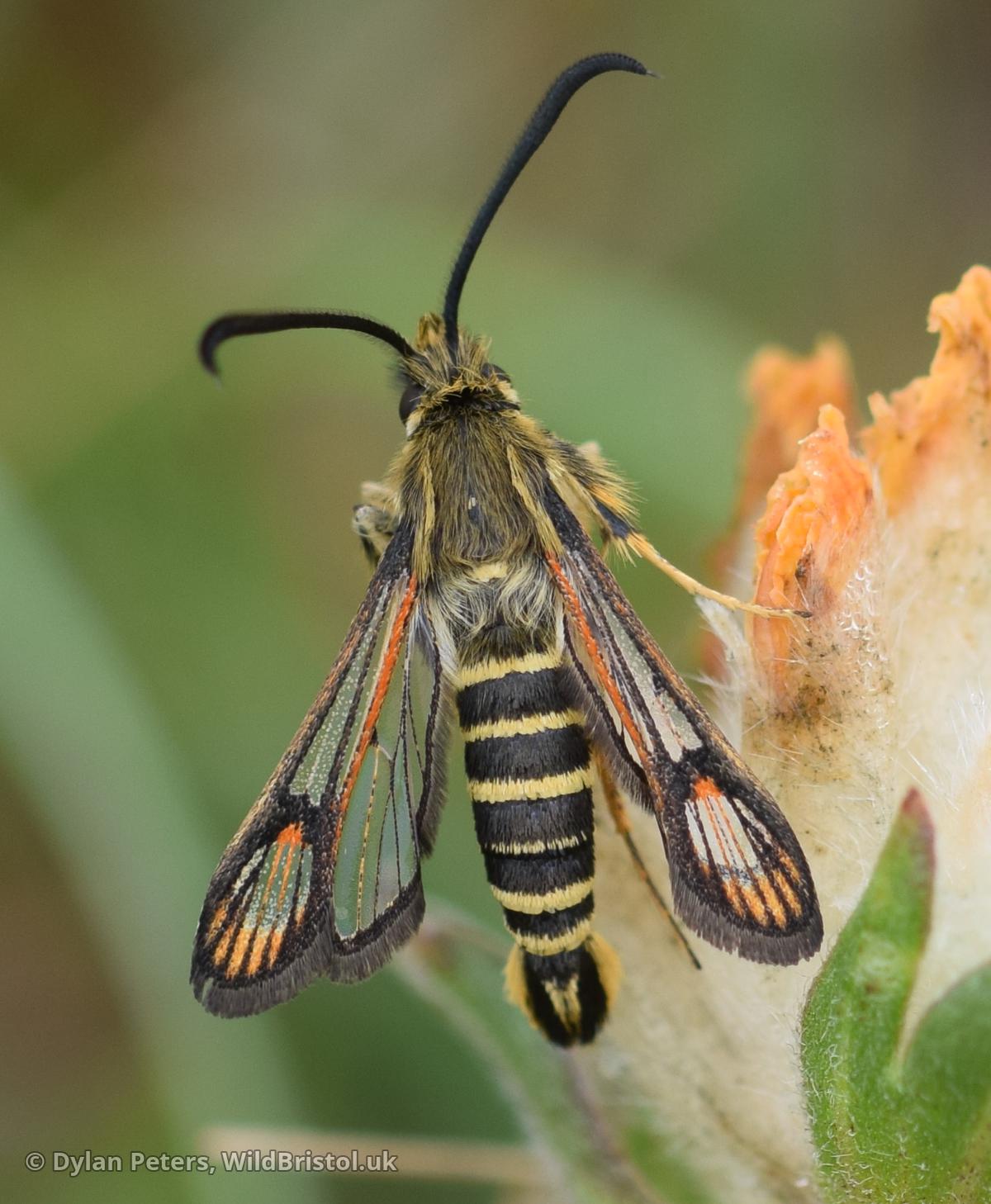
Scarce and local in the southern half of the UK. Habitat includes: chalk and limestone downland, coastal cliffs, old quarries, rocky outcrops, skeletal grassland, railway sidings, wasteland etc. Food plant: Bird's-foot Trefoil (Lotus corniculatus), Kidney Vetch (Anthyllis vulneraria) and Horseshoe Vetch (Hippocrepis comosa). Life story: A day-flying species. They mimic wasps not only in appearance but also in flight. The mating process is very long, they remaining in tandem for over an hour (my observations). Once mated, the female lays her eggs on the foliage of the food plant. The eggs are black and oval and quite closely resemble the seeds of the Bird's-foot Trefoil foot plant. Once hatched the larvae make their way down towards the base of the plant where they feed inside the roots until the following May, overwintering as larvae and only pupating for a short period; doing so by making a silken tube from the root to the surface of the ground, sealing the upper end and pupating within. Flight period: June to August.