Gasteruption laticeps? - Gasteruption laticeps?
Favourite Photos
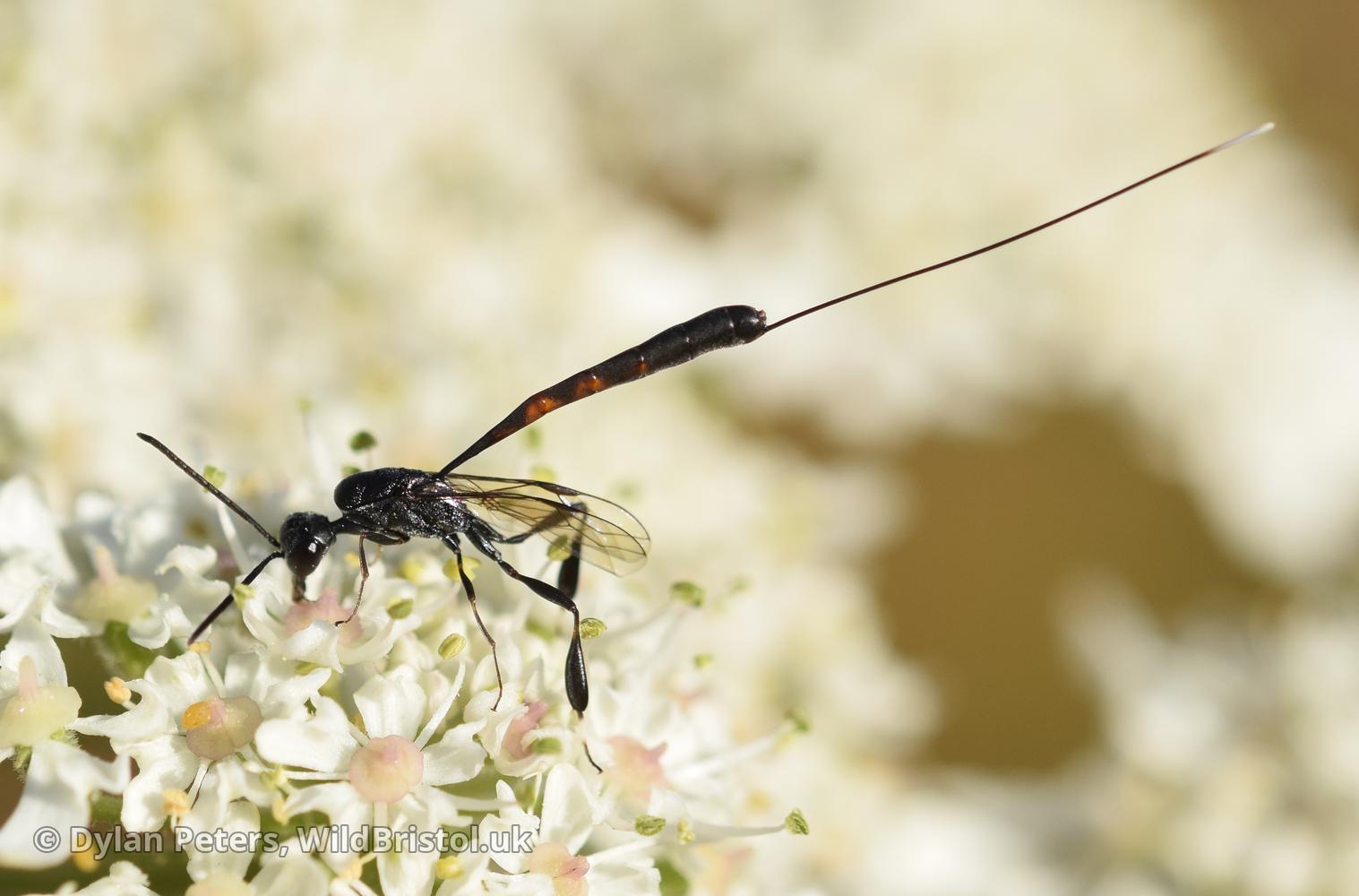
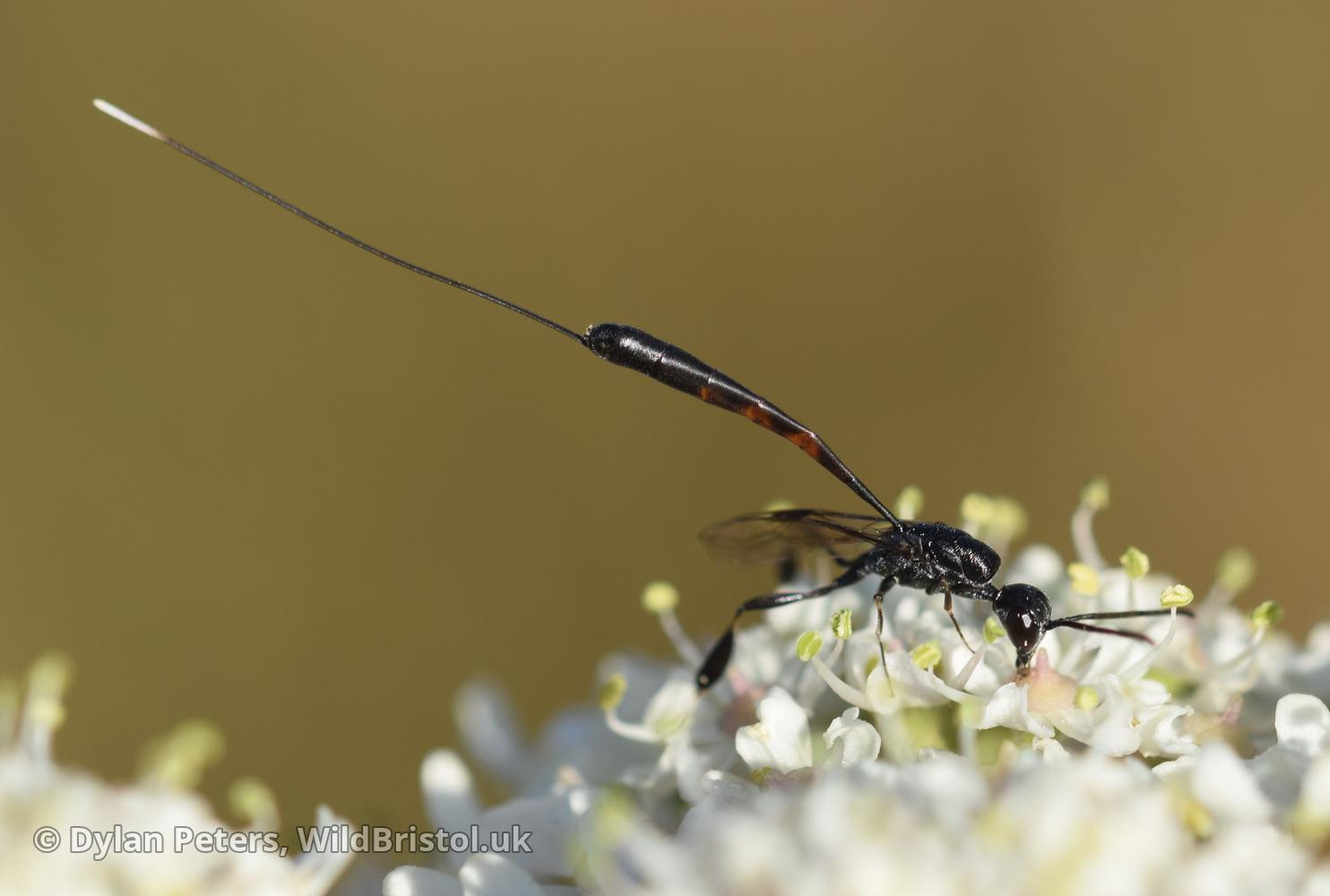
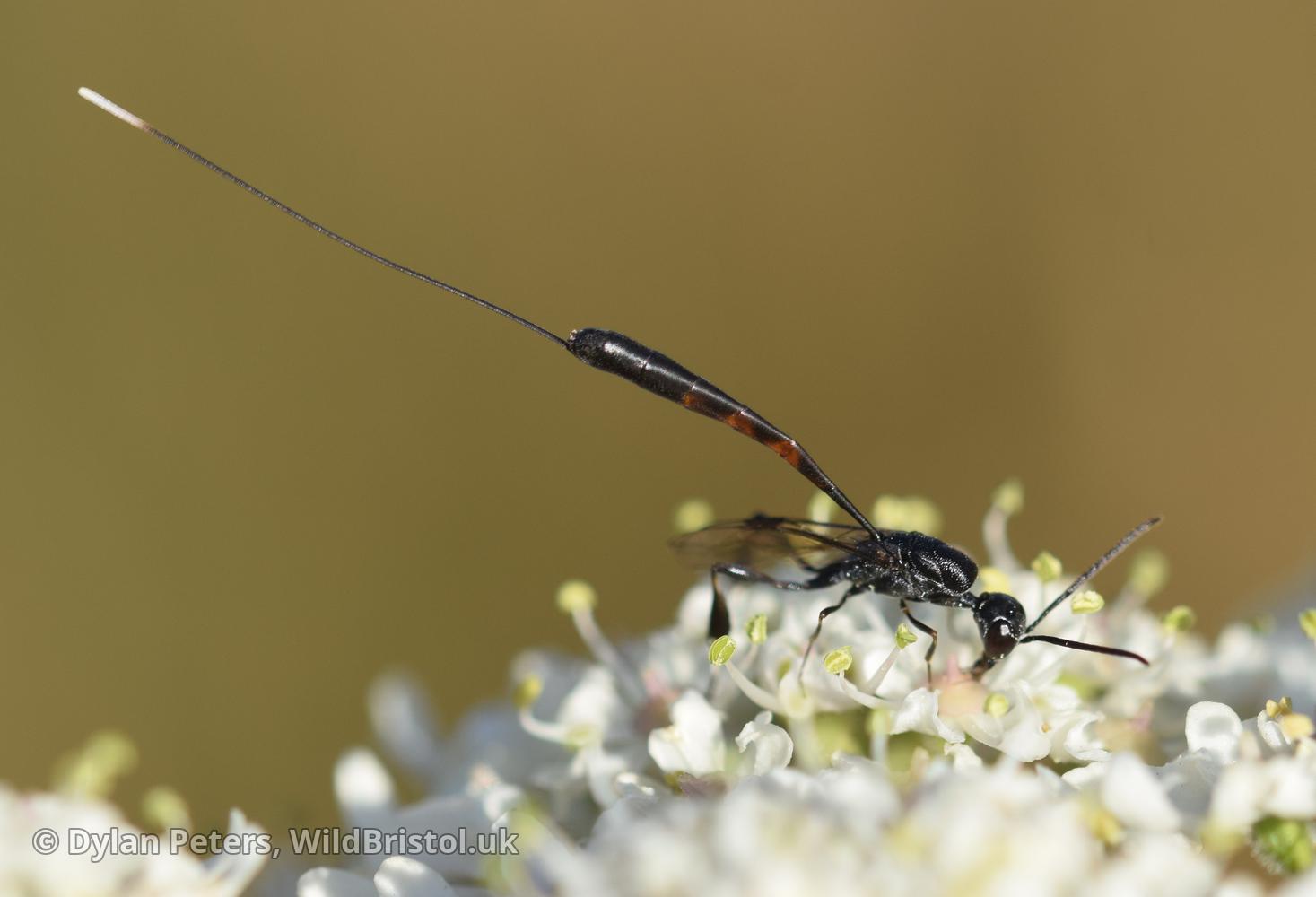
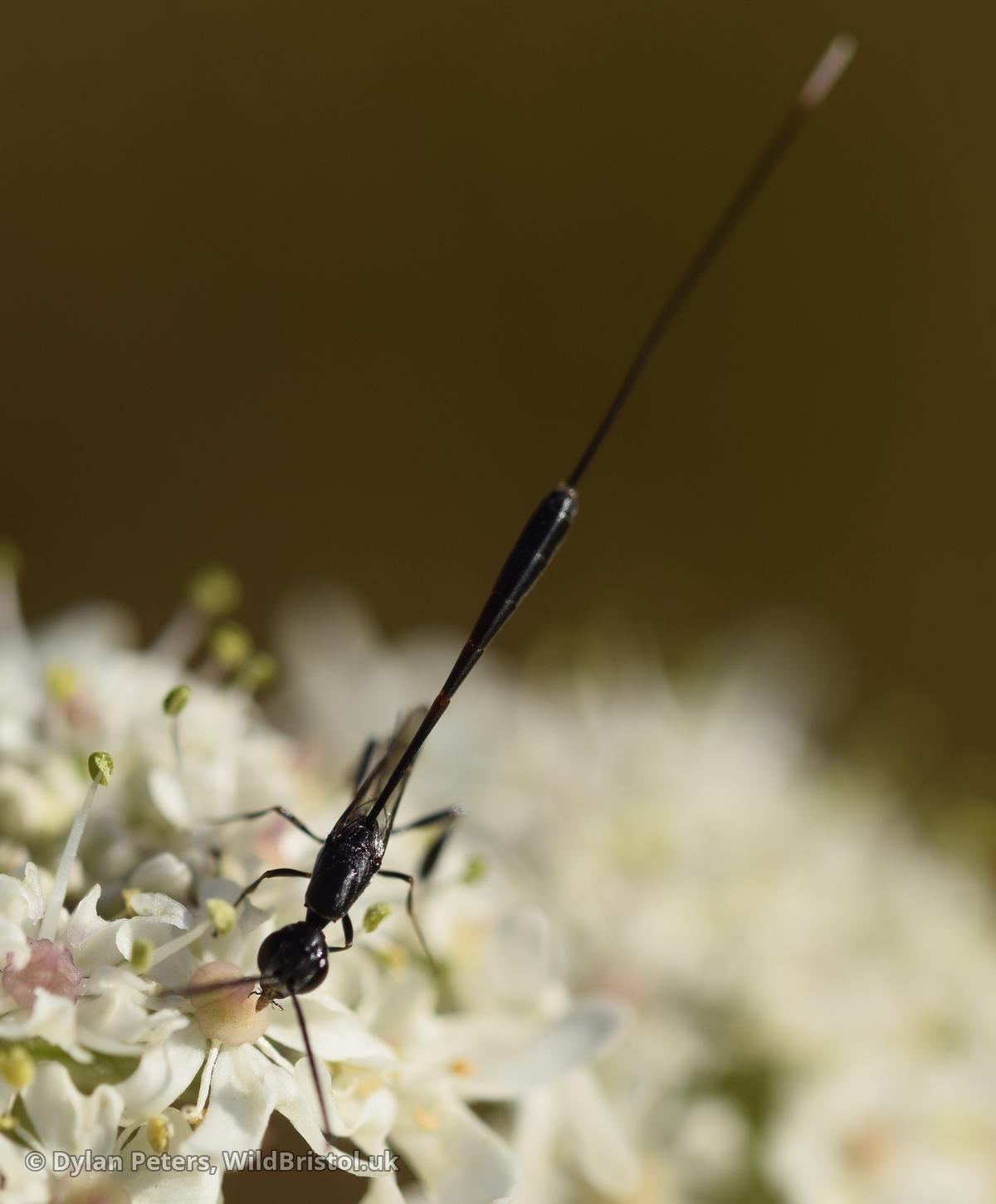
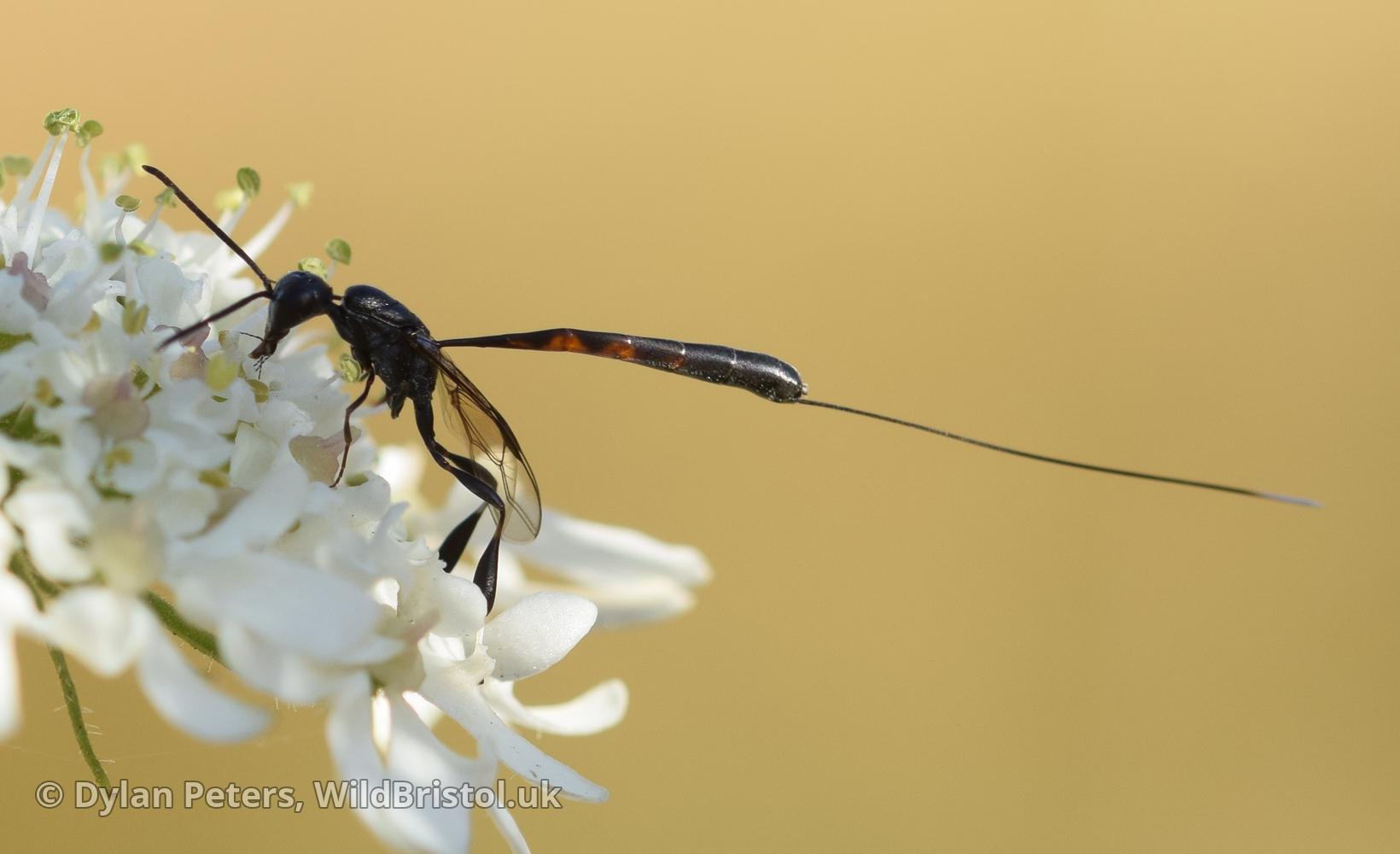
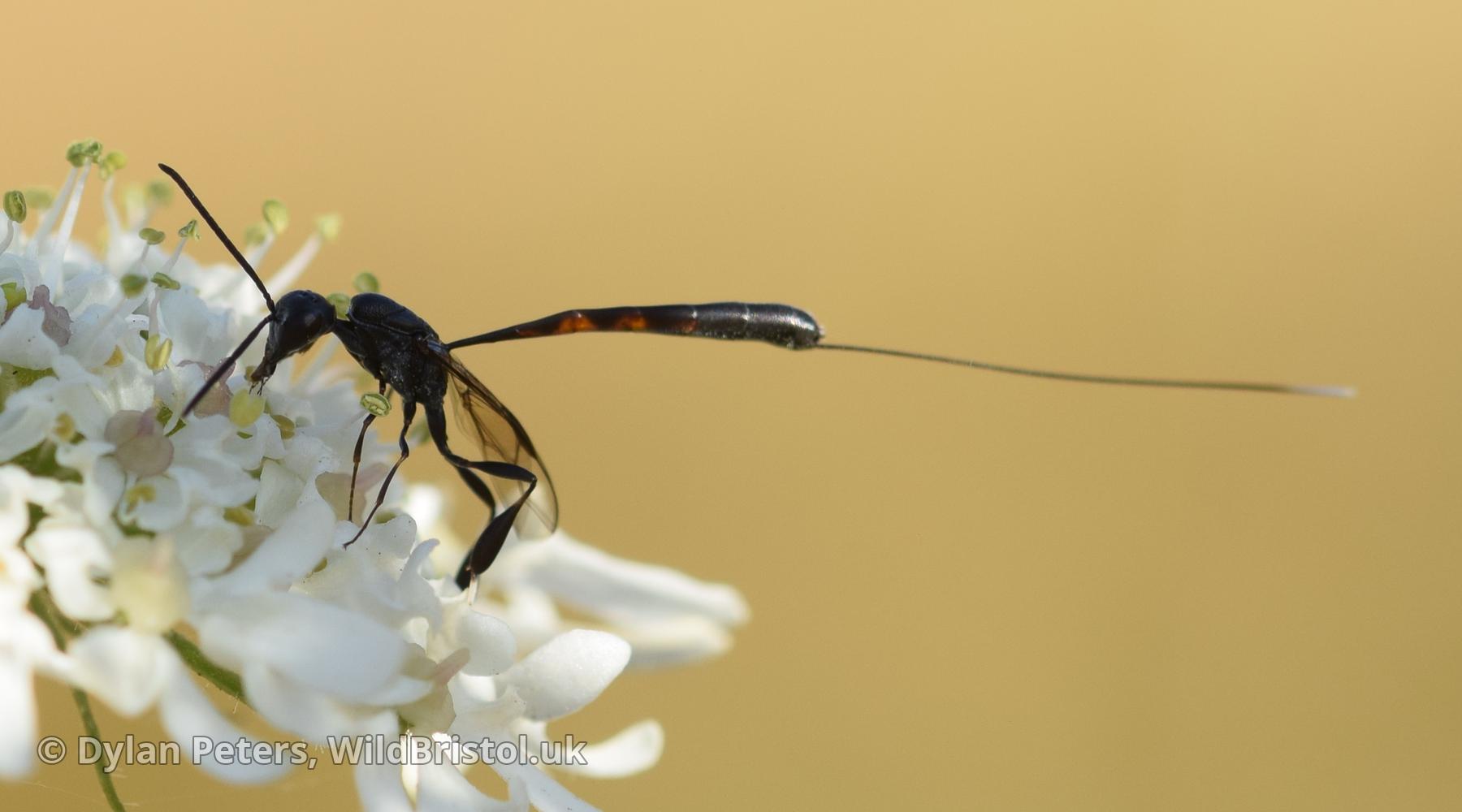
Species Description
One of three similar-looking species in the UK with ridiculously long ovipositors. No records on NBN but it is listed on the Checklist of British and Irish Hymenoptera. Similar to G. jaculator but smaller, less bulky and red markings on abdomen different - (when viewed side on) almost forming distinct triangular segments on the joins of each of tergites 2 - 4 rather than solid and more or less merging into one another, filling up the majority of tergites 2, 3 and 4. Life story: A cleptoparasite of Colletes and Hylaeus. Flight period: May to September.
See ZOOTAXA and ZooKeys for key.
Apex of ovipositor sheath with a distinct white or ivory band, 1.2-1.3 x as long as hind basitarsus; head with middle depression in front of occipital carina moderately deep and nearly round and no lateral depressions; occipital carina distinctly lamelliform and medium-sized to wide; antesternal carina rather wide and lamelliform, distinctly elevated above mesosternum; frons densely punctulate or densely very finely aciculate and without distinct interspaces; vertex more or less finely transversely aciculate and with satin sheen; head in dorsal view moderately narrowed; propleuron with satin sheen, smooth, coriaceous or finely rugulose; ovipositor sheath 1.0-1.1 x as long as body and about 1.6 x as long as metasoma; pterostigma dark brown medially. Males have fourth antennal segment 0.8-0.9 x as long as second and third segments combined and apical antennal segment about as long as fourth segment
Key:
- Ovipositor present; antenna with 14 segments (females)
- Apex of ovipositor sheath distinctly white or ivory, pale part at least about as long as hind basitarsus, rarely shorter
- Vertex without depression or with shallow depression, if with deep round medial depression in front of occipital carina (G. pseudolaticeps and laticeps), then in lateral view its border obtuse dorsally and mandible usually pale yellowish brown basally
- Antesternal carina wide to medium-sized (distinctly wider than prepectal carina) and lamelliform, curved up with fore coxa distinctly removed from mesosternum (intermediate in G. schlettereri, but included in both alternatives); medio-posteriorly mesoscutum coarsely punctate-rugose or reticulate
- Vertex with distinct depression medio-posteriorly, rarely superficially impressed; mesoscutum and mesosoma laterally often conspicuously setose, partly obscuring sculpture
- Head dorsally densely micro-sculptured and with satin sheen; antesternal carina strongly curved up; mesoscutum and mesosoma laterally less setose, less or not obscuring sculpture; pronotal side less elongate
Useful Links:
PLAZI Treatment Bank (trustworthy images)
ZOOTAXA (trustworthy images)
Blanokřídlí v Praze (see last image - in my opinion this looks more like G. laticeps)
BOLD SYSTEMS (a couple of images here (4 & 10) look more like G. caucasicum)
iNaturalist (in my opinion this looks more like G. laticeps)
iNaturalist (in my opinion this looks more like G. laticeps)