On the Subject of Hawthorn and Shepherd's-purse
Alongside my pursuit with brambles and dandelions, this year I've dedicated much of my time to two of the region's commonest plants - Hawthorn (Crataegus monogyna) and Shepherd's-purse (Capsella bursa-pastoris). These two species are both extremely variable. With hawthorn, I've come to realise that I might not actually know what the true plant looks like! Thanks to its widespread use in hedgerows over hundreds of years and more especially in recent times with the ridiculous importation of saplings from abroad and the abominable mess-ups found in cultivation, what we know of as 'Crataegus monogyna' is a muddling of many taxa, probably deserving of being classified as species in their own right, and (I dread to think of it) probably endless hybrids!
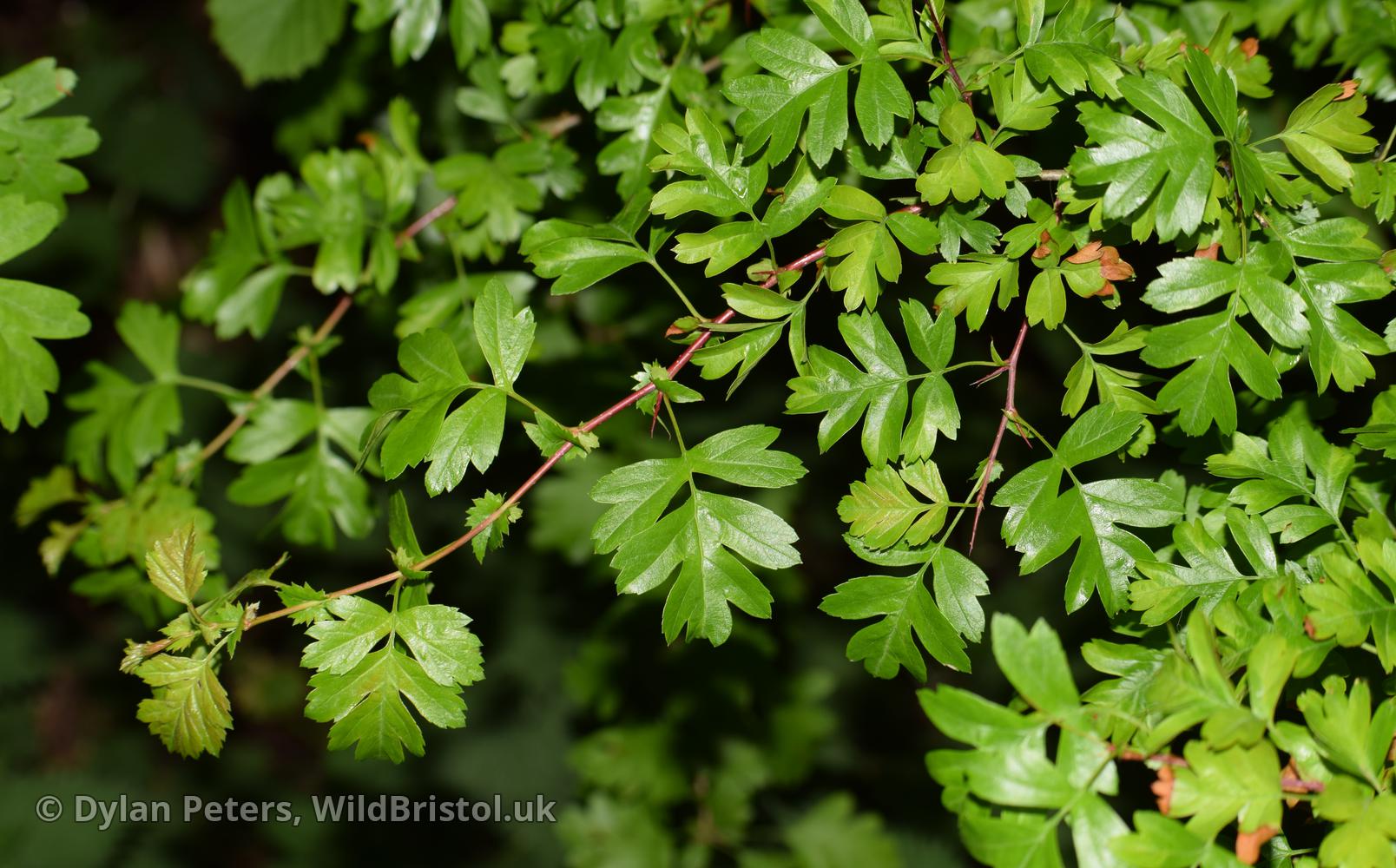
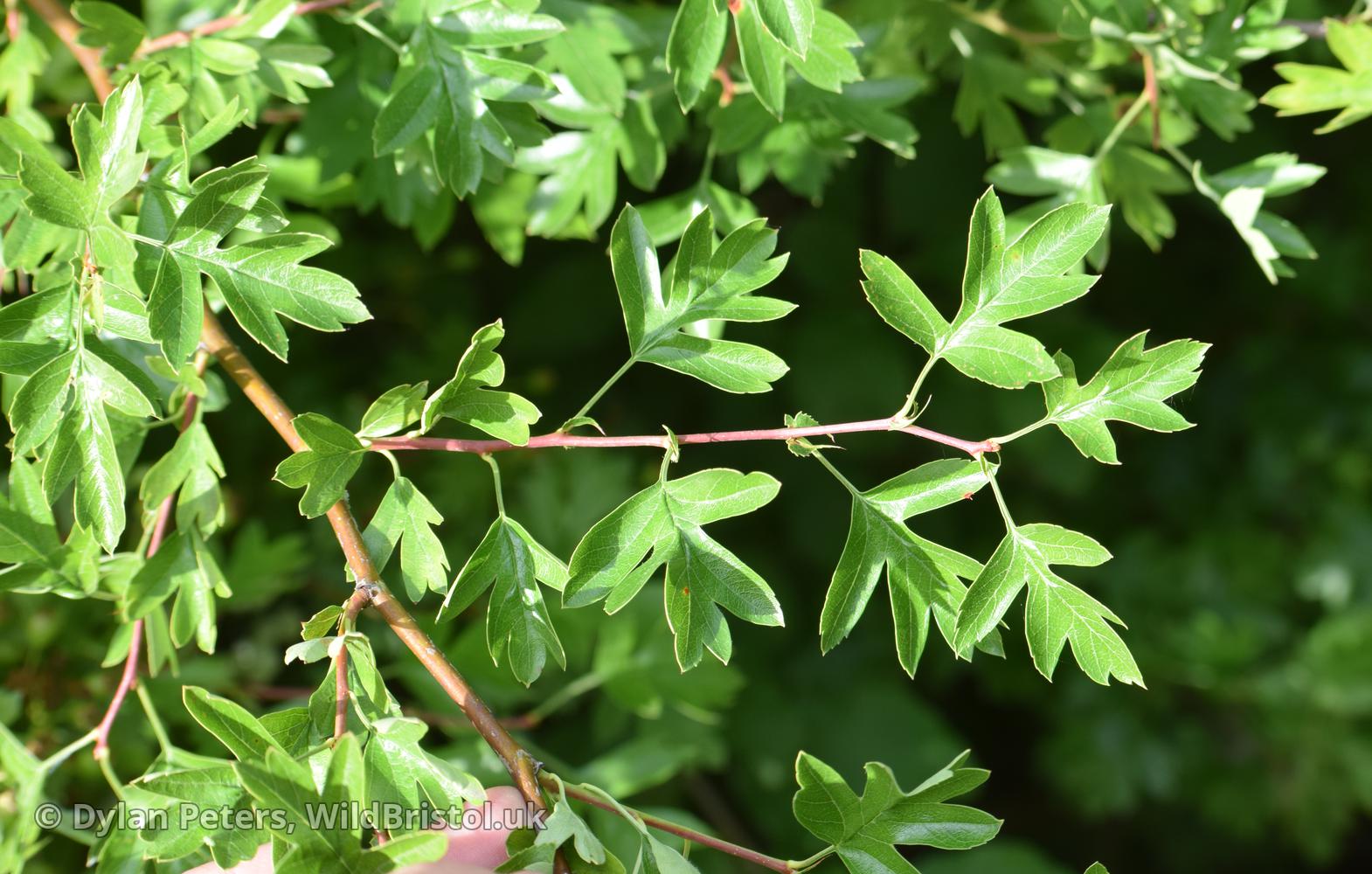
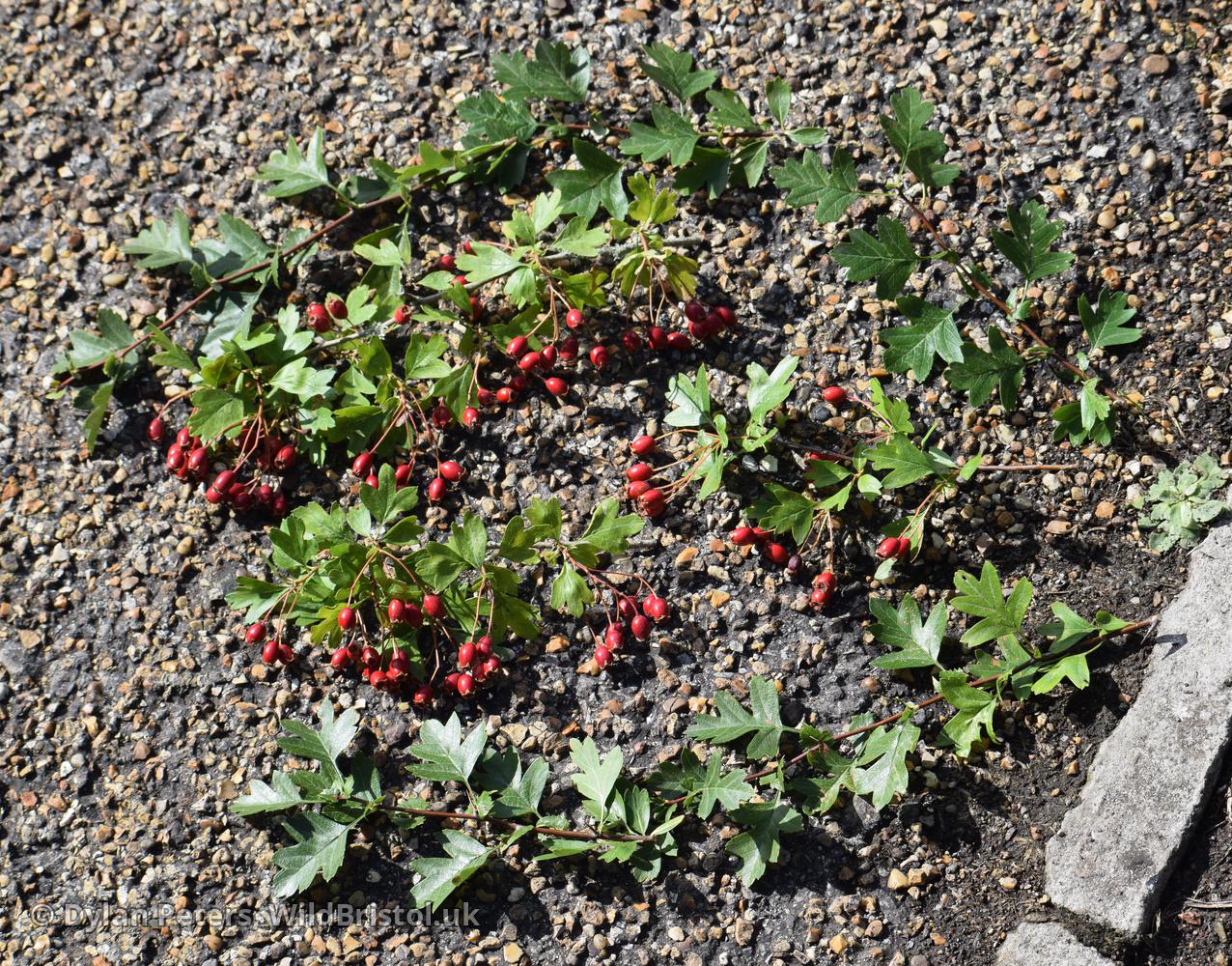
In North America, Crataegus is known to be apomictic but here it's considered to be sexual. It's quite possible that among the 246 taxa listed by Kew, lies some of them but many of them will undoubtedly be unnamed. My method has been to focus on first year shoots, looking at the leaf shape, stipules, spine and stem characters and separately the sepals, flowers and berries - the colour, shape and whether they are hairy or not.
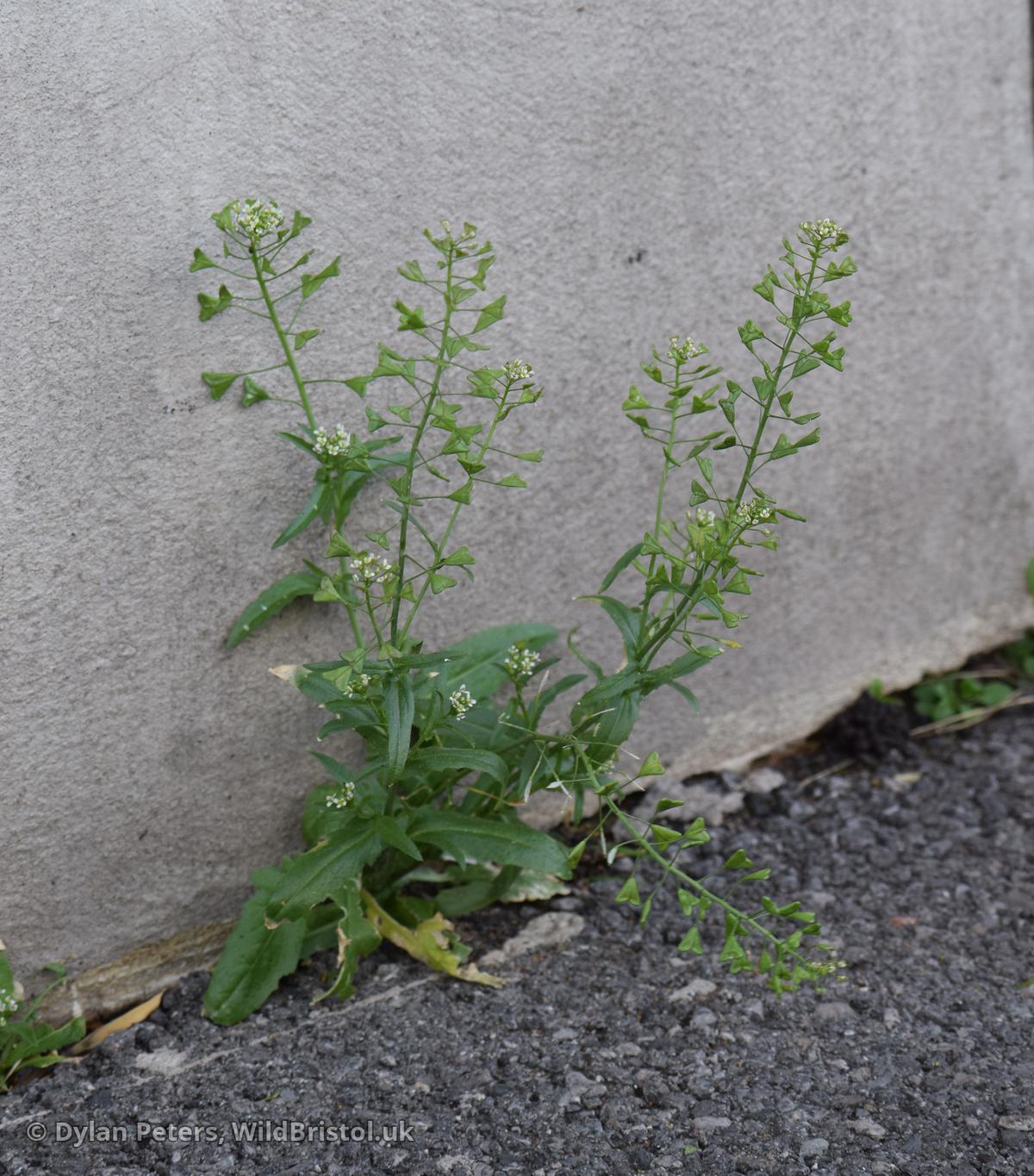
Shepherd's-purse is well-known to be a variable species but this is instead because of its high tendency to self-pollinate due to the position of the stamens being held tightly adherent to the stigma by the closed petals and dehiscing before the flower even fully opens. This, combined with the ability to still cross occasionally, has allowed numerous forms to develop and be retained. According to Stace, over 25 segregates have been recognised in the British Isles, and 7 of these are listed in the Flora of Gloucestershire (Riddelsdell, 1948) - 2 of them in our area. However virtually no work has been done on these in over a century and there are no doubt many more out there. The work was pioneered by Ernst Almquist - a Swedish Botanist who published three works on the subject: The first in 1907 where he cultivated 370 samples collected from all over Europe (though the majority of them were from his home country) and described among them 65 species - many of them impressively accompanied by photos. Unfortunately it's in German and so I had to painstakingly translate it but it was well worth it! The next was published in 1921 and was devoted to British plants (fortunately it's in English) and the third was in 1923 as a continuation of the first. Frustratingly I can't get online access to this so for now I've hit a dead end.
So far I've collected over 50 different types though some of them will be the same and cultivating them should resolve this. Two of them stand out as being the most abundant in Bristol. Type 1 and type 13. Type 1 is almost certainly a match for C. druceana and is a fairly robust plant with dark grey-green foliage, nearly entire leaves, leafy stems and large more or less straight-sided capsules (measuring c. 9-11 x 6-7mm) with a deep notch, style not exceeding it and triangular-oblong lobes, and are held on long, straight, more or less patent pedicels. The latter is a smaller plant with paler foliage, deeply pinnate leaf rosettes which are more or less appressed to the ground, the stems are less leafy and it possesses smaller, slightly convex-sided capsules (measuring c. 6-7 x 4-5mm) with a shallower notch, style more or less equaling it and rounded lobes. I had originally thought it might fit C. trevirorum but since printing off the 1907 paper, I'm now thinking C. polyedra might be a better fit. Only time will tell.
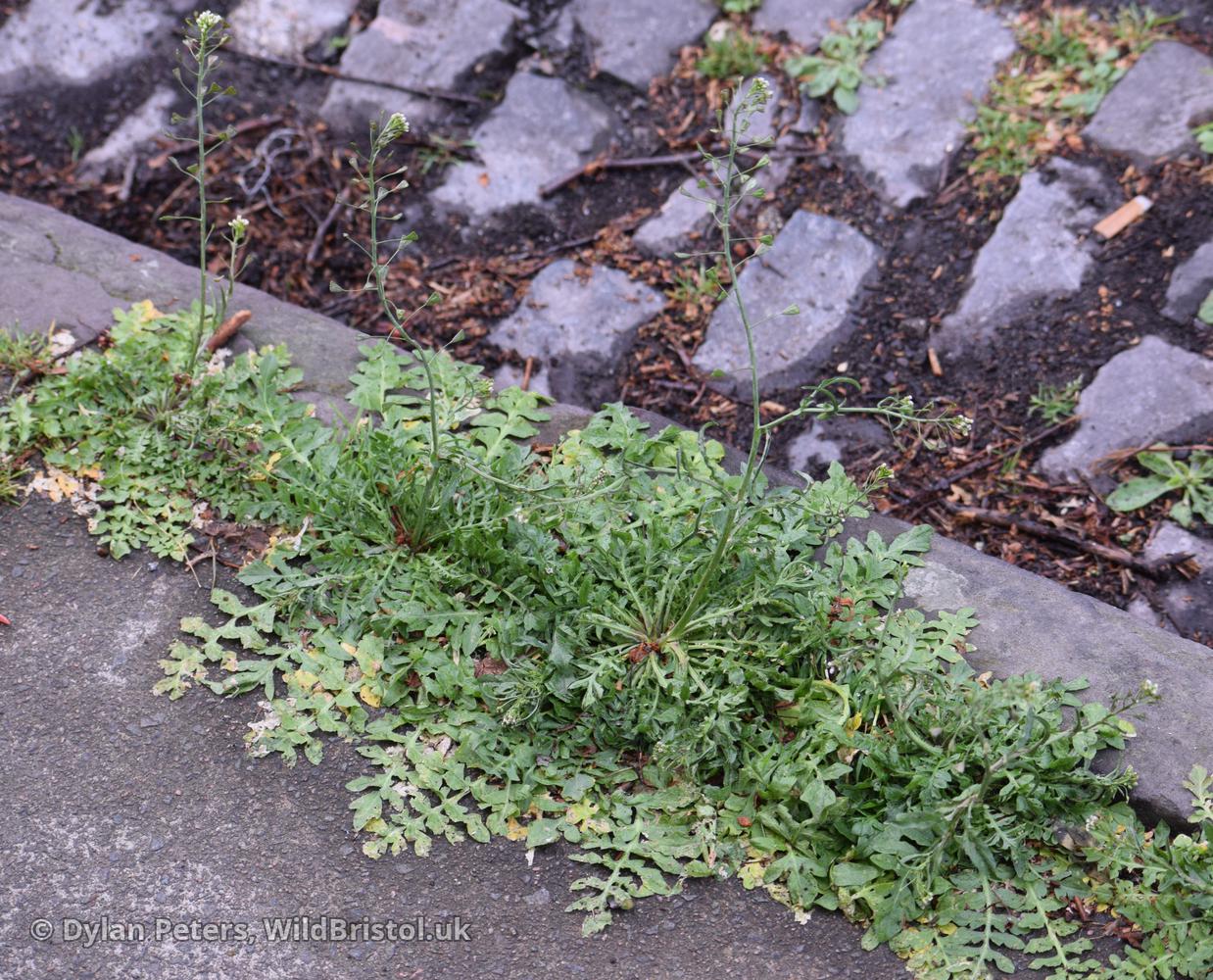

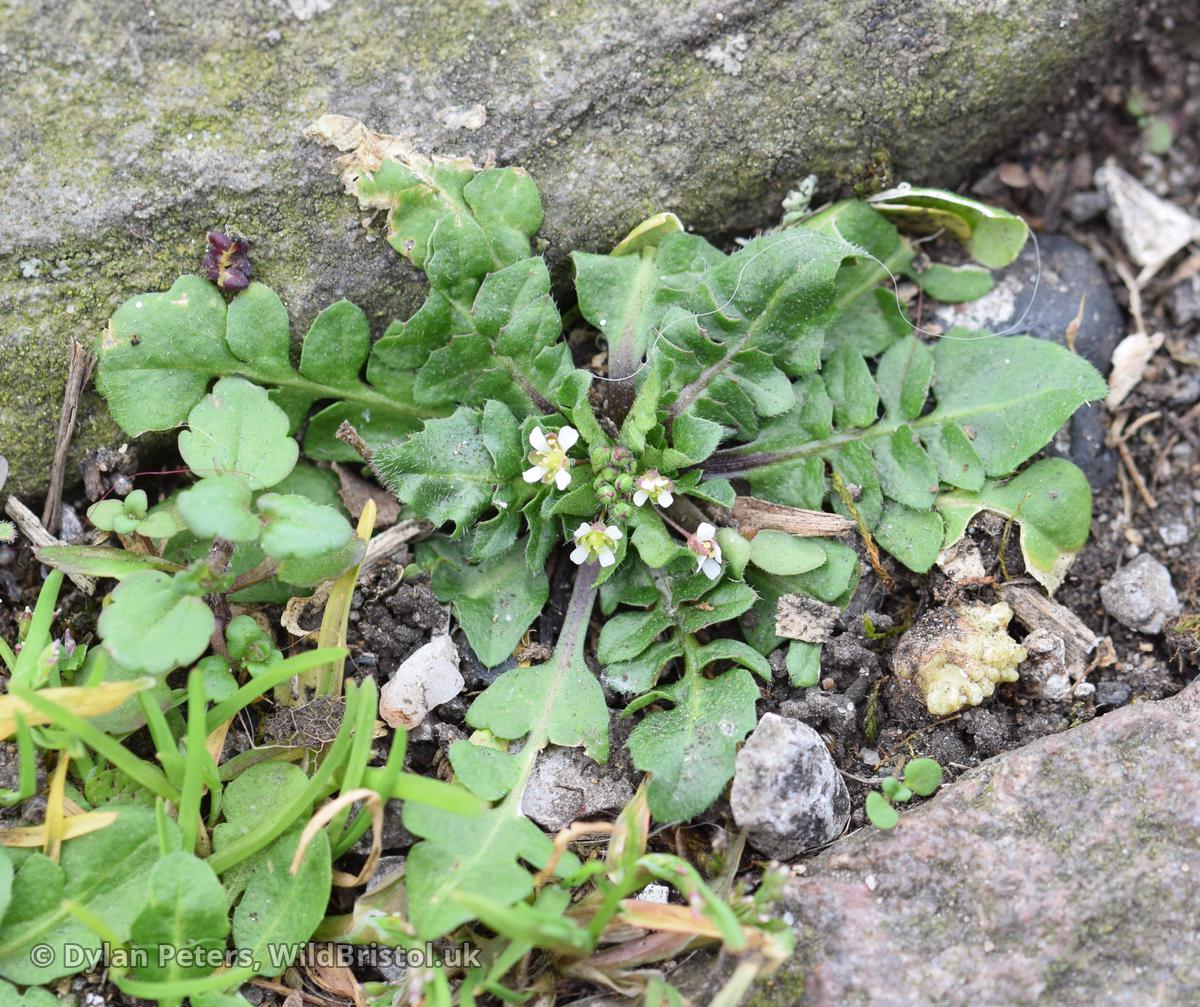
The most interesting form I've encountered so far is of a very squat plant which grows around Bathurst Basin. It has very crowded leaves with blunt overlapping lobes, it scarcely produces a stem, and has hairy sepals which are green in bud with bright magenta margins, before becoming suffused reddish at maturity; and has untypically long, narrowly obovate, almost rectangular petals which are double the length of the sepals. It appears to match with top searches of C. rubella on GBIF - recorded from the Netherlands by someone going by the name of Sipke Gonggrijp. Though it is certainly not C. rubella which has a very different leaf shape. However, I imagine that C. rubella, though it might originally have been a good species, its interpretation appears to have been so warped that it might not now be any more practical than its C. bursa-pastoris counterpart.
I hope to produce more on these two topics in the future!